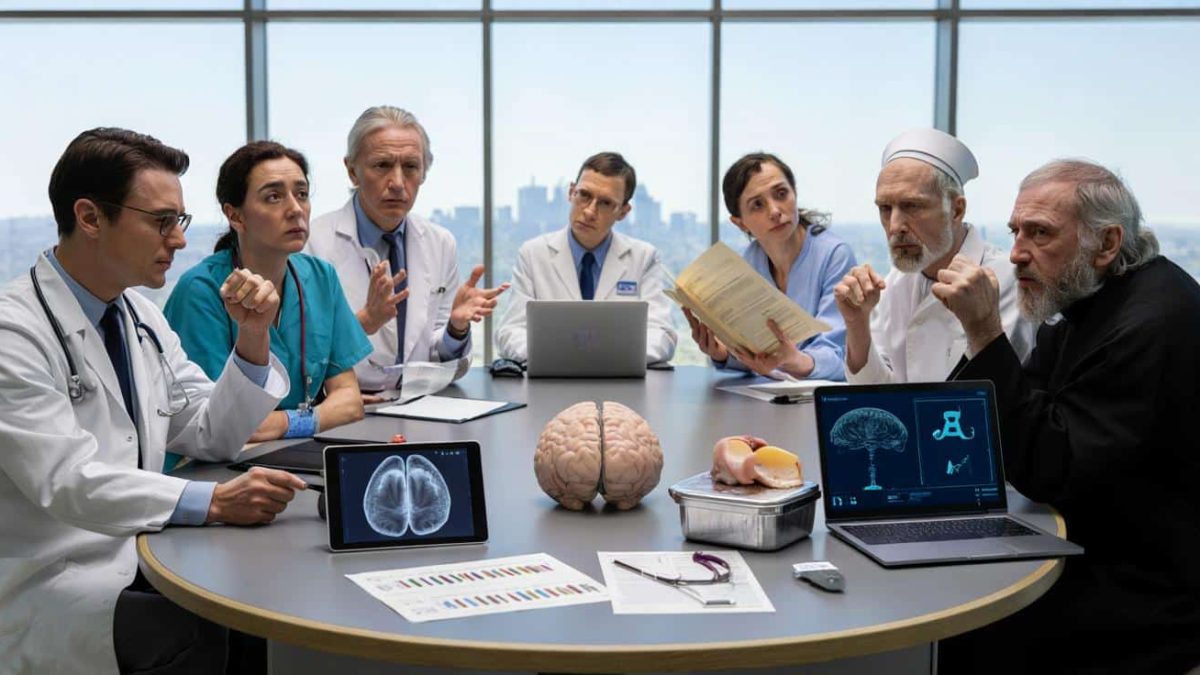
Bioethics has become a minefield of competing interests and perspectives. As the world grapples with the ethical implications of rapid technological advancements, finding common ground has proven increasingly elusive. However, an honest compromise may be a more realistic and meaningful solution than a veneer of consensus.
In 2026, France will host extensive public debates on bioethics, covering a wide range of topics from artificial intelligence in medicine to genetic testing and organ donation. These discussions promise to be complex and contentious, as stakeholders with diverse backgrounds and priorities come together to shape the future of these sensitive issues.
The Elusive Quest for Consensus in Bioethics
Achieving true consensus in bioethics is a formidable challenge. Differing moral frameworks, religious beliefs, and personal experiences often lead to deeply entrenched positions that resist compromise. Attempts to find a one-size-fits-all solution frequently result in watered-down compromises that satisfy no one, or a fragile agreement that quickly unravels.
Experts argue that the pursuit of consensus in bioethics is often a mirage, masking underlying tensions and unresolved conflicts. Instead, they suggest that an honest, transparent discussion of the trade-offs and the willingness to embrace imperfect solutions may be a more constructive path forward.
- ➡Über 80 und dennoch geistig fit: Warum manche Gehirne nicht altern
- ➡KI-Schock: Was künstliche Intelligenz über unseren Glauben an den Fortschritt enthüllt
- ➡Forscher entdecken: Gefährliche Bullenhaie haben ein heimliches Sozialleben
- ➡Endometriose in Thüringen: Warum immer mehr Frauen endlich eine Diagnose bekommen
Bioethics has become a specialized field, attracting a diverse array of professionals, from medical researchers and legal scholars to philosophers and policymakers. This interdisciplinary approach is essential, but it also introduces a new layer of complexity, as each discipline brings its own set of priorities and perspectives to the table.
Bioethics as a Professional Discipline
As bioethics evolves, there is a growing recognition that it must be treated as a professional discipline in its own right, with specialized training and expertise. This shift towards professionalization is crucial, as it allows for the development of a shared language, common frameworks, and a deeper understanding of the nuances involved in these sensitive debates.
By acknowledging bioethics as a distinct field, we can better navigate the competing interests and ensure that the voices of all stakeholders are heard and considered. This professionalization also helps to establish clear ethical guidelines and decision-making processes, which can provide a roadmap for navigating the complex ethical challenges of the future.
However, the path towards professionalization is not without its challenges. Integrating diverse perspectives and reaching a common understanding of the core principles of bioethics is an ongoing process that requires patience, empathy, and a willingness to compromise.
- ➡Der Bob-Haarschnitt erobert 2026 die Stars: Warum der kompakte Kurzhaartrend so beliebt ist
- ➡Wie Sie durch Ihr Sprechtempo sofort intelligenter und überzeugender wirken
- ➡Neuer Mercedes CLA 250+ AMG Line: Übertrifft er Tesla in Sachen Effizienz?
- ➡Warum frühes Jäten von Unkraut zwischen Pflastersteinen alles nur schlimmer macht
The Practical Implications of Bioethical Decisions
The debates and decisions made in the realm of bioethics have very real and tangible impacts on people’s lives. From the use of artificial intelligence in healthcare to the regulation of genetic testing and organ donation, the ethical choices we make today will shape the future of these critical areas.
It is essential that these discussions move beyond abstract philosophical debates and consider the real-world consequences of the policies and regulations that emerge. By focusing on the practical implications, we can ensure that the decisions made are not only ethically sound but also effectively address the needs and concerns of the individuals and communities they affect.
This practical approach to bioethics also requires a deep understanding of the technical and scientific aspects of the issues at hand. Bridging the gap between ethical principles and practical implementation is a crucial challenge that must be addressed to ensure that bioethical decisions have a meaningful and lasting impact.
The Value of Imperfect Compromises
| Advantages of Imperfect Compromises | Disadvantages of Seeking Consensus |
|---|---|
|
|
- ➡Selbstgemachter Hähnchenaufschnitt: Einfach, genial und ohne versteckte Zusätze
- ➡Generation Z Forgets Handwriting: Researchers Sound the Alarm on Communication Crisis
- ➡Dieser oft übersehene Ort in der Küche ist oft schmutziger als die Toilette
- ➡Generation Z übernimmt das Ruder – und ist genervt von sich selbst
In the realm of bioethics, the pursuit of perfect consensus may be an elusive and ultimately counterproductive goal. Instead, embracing imperfect compromises that acknowledge the underlying tensions and trade-offs may be a more honest and effective approach.
Imperfect compromises allow for incremental progress, recognizing that bioethical issues are complex and that solutions may need to evolve over time. They also promote transparency and build trust by openly addressing the challenges and tensions, rather than attempting to paper over them with a veneer of agreement.
“In bioethics, the search for consensus often leads to the lowest common denominator. By embracing imperfect solutions, we can make real progress while acknowledging the nuances and trade-offs involved.”
– Dr. Sophia Müller, Bioethics Researcher
While imperfect compromises may not satisfy everyone, they can serve as a foundation for ongoing dialogue and adaptation, ultimately leading to more durable and meaningful solutions.
The Path Forward: Navigating the Bioethical Landscape
As the world grapples with the ethical implications of rapid technological advancements, the need for a thoughtful and inclusive approach to bioethics has never been more pressing. The 2026 debates in France will serve as a crucial test case, as policymakers, experts, and the public come together to shape the future of these sensitive issues.
By embracing the complexity of bioethics, acknowledging the diverse perspectives and interests at play, and being willing to embrace imperfect compromises, we can move beyond the illusion of consensus and work towards meaningful progress. This will require a shift in mindset, a commitment to interdisciplinary collaboration, and a deep understanding of the practical implications of our decisions.
Ultimately, the path forward in bioethics is not one of easy answers or universal agreement, but rather a journey of continuous learning, adaptation, and a willingness to navigate the nuances and trade-offs involved. Only by embracing this challenge can we ensure that the ethical foundations we build today will serve us well in the complex and rapidly evolving world of tomorrow.
Frequently Asked Questions
What is the purpose of the 2026 bioethics debates in France?
The 2026 bioethics debates in France are intended to engage the public and various stakeholders in discussions about the ethical implications of emerging technologies and medical advancements, such as artificial intelligence in healthcare, genetic testing, and organ donation.
Why is consensus so difficult to achieve in bioethics?
Consensus in bioethics is challenging because it requires reconciling diverse moral frameworks, religious beliefs, personal experiences, and professional priorities. The interdisciplinary nature of the field further complicates the search for a one-size-fits-all solution.
How can imperfect compromises be a better solution than seeking consensus?
Imperfect compromises acknowledge the underlying tensions and trade-offs involved in bioethical issues, allowing for incremental progress and adaptation over time. They promote transparency, build trust, and recognize the complexity of these challenges, rather than attempting to paper over them with a veneer of agreement.
What are the key steps to professionalizing the field of bioethics?
Professionalizing bioethics involves developing specialized training and expertise, establishing a shared language and common frameworks, and integrating diverse perspectives to ensure that the voices of all stakeholders are heard and considered.
How can the practical implications of bioethical decisions be better addressed?
By focusing on the real-world consequences of bioethical policies and regulations, and bridging the gap between ethical principles and practical implementation, we can ensure that the decisions made have a meaningful and lasting impact on the individuals and communities they affect.
What are the key challenges in navigating the bioethical landscape?
The key challenges include embracing the complexity of bioethical issues, acknowledging diverse perspectives and interests, being willing to embrace imperfect compromises, and committing to interdisciplinary collaboration and a deep understanding of the practical implications of our decisions.
How can the public be better engaged in bioethical debates?
Engaging the public in bioethical debates requires clear and accessible communication, highlighting the real-world impacts of the issues at hand, and creating opportunities for diverse voices and perspectives to be heard and considered.
What role do experts and policymakers play in shaping the future of bioethics?
Experts and policymakers play a crucial role in shaping the future of bioethics by providing specialized knowledge, facilitating interdisciplinary collaboration, and ensuring that the ethical foundations we build today are responsive to the complex and rapidly evolving challenges of the future.
- ➡Das Fischerdorf bei Lissabon: Günstiges Surfparadies statt überlaufener Insel-Hotspots
- ➡Warnsignale am Zitronenbaum: Was braune Kügelchen im April bedeuten
- ➡Fußball-Legende Aimé Jacquet: Wie Frankreichs Stars ihren stillen Helden feiern
- ➡Wälder als Wachstumswunder: Warum junge Bäume viel mehr CO₂ speichern als erwartet