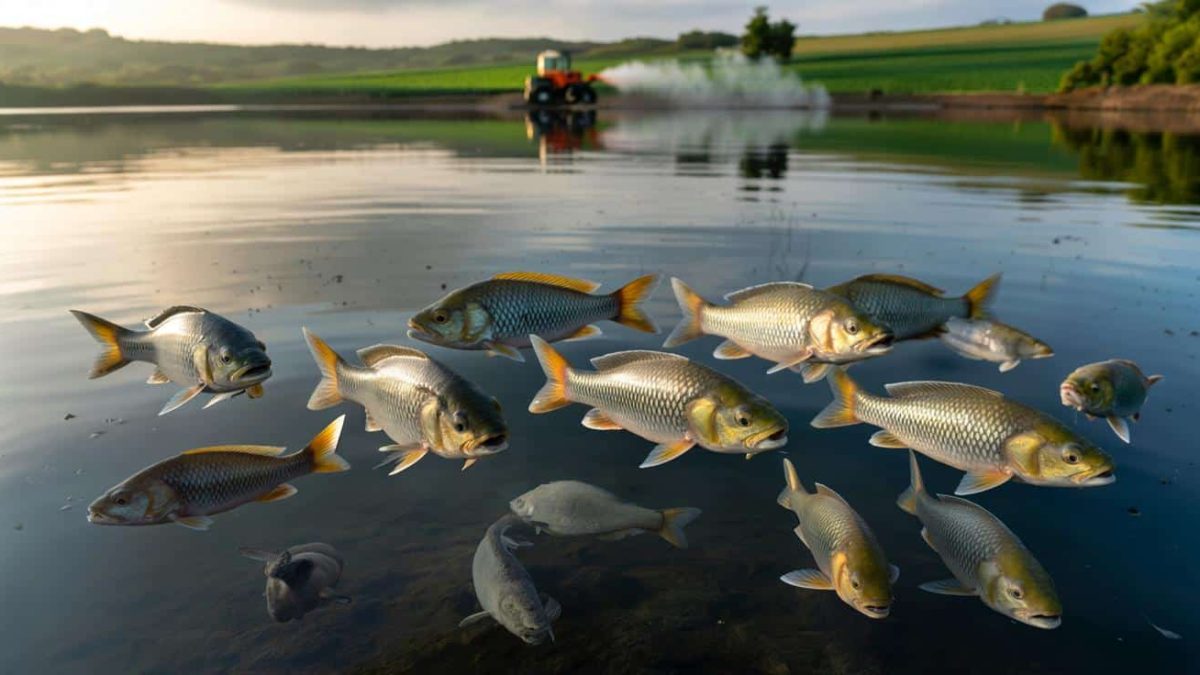
Freshwater fish in lakes and rivers are facing a growing threat from a widely used insecticide. A recent international study has revealed that even tiny amounts of the pesticide chlorpyrifos can dramatically accelerate the aging process in various fish species, leading to their premature death.
The findings are particularly concerning, as chlorpyrifos is one of the most commonly employed pesticides worldwide, used extensively in agriculture to protect crops from insects. The study’s alarming conclusions challenge the existing risk assessments and call for a reevaluation of the pesticide’s impact on aquatic ecosystems.
Rapid Aging Caused by Minuscule Pesticide Exposure
The research, conducted by an international team of scientists, has uncovered a troubling correlation between exposure to chlorpyrifos and the accelerated aging of freshwater fish. Even at concentrations far below the levels considered “toxic,” the pesticide was found to have a profound effect on the lifespan of various fish species.
The researchers examined the physiological changes in the fish, analyzing markers of aging such as telomere length and oxidative stress. Their findings revealed that fish exposed to the pesticide exhibited significantly faster aging processes, with their bodies deteriorating at a much quicker rate compared to unexposed control groups.
Surprisingly, this rapid aging was observed even in fish that did not display any outward signs of poisoning or immediate health issues. The study highlights the insidious nature of the pesticide’s impact, undermining the traditional risk assessment methods that primarily focus on overt toxicity.
Disruption of the Age Structure in Contaminated Ecosystems
The implications of this accelerated aging go beyond the individual fish. The researchers found that in water bodies contaminated with chlorpyrifos, the overall age structure of the fish populations was severely disrupted. In these ecosystems, there was a noticeable lack of older, mature fish, with the populations skewing heavily towards younger individuals.
This shift in the age distribution can have cascading effects on the entire aquatic food web. Older, larger fish often play crucial roles in maintaining the balance and stability of these ecosystems. Their absence can lead to the disruption of predator-prey relationships, changes in nutrient cycling, and the overall destabilization of the aquatic community.
The study’s findings raise concerns about the long-term viability of freshwater fish populations in areas where chlorpyrifos is widely used, as the ongoing accelerated aging could potentially lead to the collapse of these critical ecosystems.
Limitations of Current Risk Assessment Approaches
| Conventional Risk Assessment | Limitations Revealed by the Study |
|---|---|
| Focuses on acute toxicity and immediate health effects | Fails to account for long-term, sublethal impacts on aging and lifespan |
| Relies on predetermined “safe” exposure levels | Ignores the possibility of detrimental effects at concentrations below the established thresholds |
| Assesses individual organisms in isolation | Neglects the broader, systemic effects on population dynamics and ecosystem function |
The study’s findings highlight the need for a more comprehensive and holistic approach to risk assessment, one that considers the long-term, sublethal impacts of pesticides on the overall health and resilience of aquatic ecosystems.
Implications for Human Health and Food Security
The consequences of this rapid aging and potential collapse of fish populations extend beyond the immediate environmental concerns. Freshwater fish are a vital source of nutrition and livelihood for millions of people worldwide, particularly in developing regions. The disruption of these aquatic ecosystems could have far-reaching implications for human health and food security.
As older, larger fish become scarce, the availability and affordability of this important protein source may diminish. This could lead to nutritional deficiencies, especially in communities that rely heavily on freshwater fish for their dietary needs.
Additionally, the collapse of fish populations can have ripple effects on the broader economy, impacting the livelihoods of fishermen, aquaculture businesses, and the industries that depend on a thriving aquatic ecosystem.
“This study highlights the urgent need to rethink our approach to pesticide regulation and environmental protection. The cascading effects of chlorpyrifos on aquatic life point to the critical importance of considering long-term, sublethal impacts in risk assessments. We must act now to safeguard the health of our freshwater ecosystems and the communities that depend on them.”
– Dr. Sarah Linden, Environmental Toxicologist
Towards a Sustainable Future
The revelations from this study underscore the pressing need for a comprehensive reevaluation of chlorpyrifos and other widely used pesticides. Policymakers, regulators, and the agricultural industry must work together to develop more robust and holistic risk assessment frameworks that account for the long-term, ecosystem-wide effects of these chemicals.
Additionally, the promotion of sustainable farming practices, the adoption of integrated pest management strategies, and the exploration of alternative, less-harmful pest control methods are crucial steps in mitigating the impact of pesticides on aquatic environments.
By taking these actions, we can work towards a future where freshwater ecosystems and the communities that depend on them are protected from the insidious effects of common pesticides. The health of our waterways and the well-being of our global population are inextricably linked, and safeguarding this delicate balance is a responsibility we all share.
Frequently Asked Questions
What is chlorpyrifos, and why is it concerning?
Chlorpyrifos is a commonly used organophosphate insecticide that is widely employed in agriculture to protect crops from pests. The recent study has found that even small amounts of this pesticide can dramatically accelerate the aging process in freshwater fish, leading to their premature death.
How does chlorpyrifos cause rapid aging in fish?
The study has found that exposure to chlorpyrifos, even at concentrations far below the levels considered “toxic,” can disrupt the normal aging process in fish. It leads to increased oxidative stress and shortening of telomeres, which are important markers of cellular aging.
- ➡Geniale Sprüche gegen Nerv-Anrufe von Telefonwerbern: So bringen Sie sie schnell zum Auflegen
- ➡Dieses geheime Winter-Gratin mit Lauch macht alle am Tisch süchtig
- ➡Radfahren im Alter: Wie moderate Bewegung die Ausdauer stabil hält
- ➡Das Gehalt von Tankstellen-Mitarbeitern: Wie viel verdienen sie wirklich?
What are the consequences of this accelerated aging on aquatic ecosystems?
The rapid aging of fish populations in contaminated water bodies leads to a disruption of the age structure, with a noticeable lack of older, mature fish. This can have cascading effects on the entire aquatic food web, potentially destabilizing the ecosystem and leading to the collapse of fish populations.
How does this impact human health and food security?
Freshwater fish are a crucial source of nutrition and livelihood for many communities around the world. The disruption of fish populations due to the effects of chlorpyrifos can lead to reduced availability and affordability of this important protein source, potentially contributing to nutritional deficiencies and food insecurity.
What needs to be done to address the issue?
Policymakers, regulators, and the agricultural industry must work together to reevaluate the use of chlorpyrifos and other pesticides, considering their long-term, ecosystem-wide impacts. Promoting sustainable farming practices, adopting integrated pest management strategies, and exploring alternative pest control methods are crucial steps to mitigate the negative effects of pesticides on aquatic environments.
How can individuals contribute to a solution?
Individuals can support sustainable agriculture, advocate for stricter regulations on pesticide use, and make informed purchasing decisions that prioritize environmentally-friendly food production. By raising awareness and collectively demanding change, we can work towards a future where our freshwater ecosystems are protected, and the communities that depend on them can thrive.
- ➡Kiwi Price Shock in the Supermarket: How Packaging Doubles the Price Per Kilogram
- ➡Tatsächlich mehr Insekten im Klee? Was Gartenbesitzer darüber wissen müssen
- ➡Genialer Trick: Mit einem Küchenprodukt riecht dein WC wie im Hotel
- ➡Immer online, immer gestresst: Wie “Blurring” dein Leben heimlich auffrisst
What is the timeline for addressing this issue?
The study’s findings highlight the urgency of the situation, as the accelerated aging of fish populations is already underway in many water bodies. Immediate action is required to reevaluate the use of chlorpyrifos and implement more comprehensive risk assessment frameworks. Failing to address this issue promptly could lead to the irreversible collapse of crucial aquatic ecosystems.
Are there any alternative pest control methods that are less harmful to the environment?
Yes, there are several alternative pest control approaches that are more environmentally friendly, such as integrated pest management, organic farming practices, and the use of natural, non-chemical deterrents. These methods aim to minimize the reliance on synthetic pesticides and promote the overall health and resilience of agricultural ecosystems.