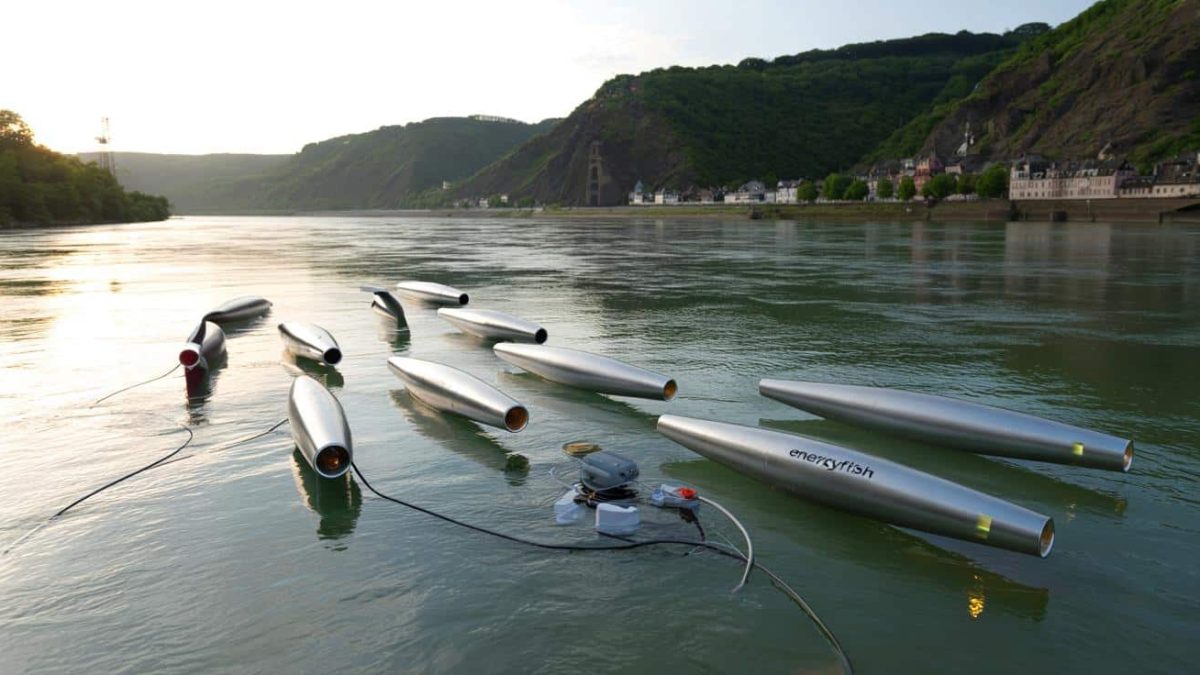
Imagine a river teeming with life, not just fish but also a hidden network of compact, floating turbines that harness the power of the flowing water. This is the vision of a Bavarian startup that aims to transform the Rhine into a silent, invisible power plant. Dozens of these mini-turbines, dubbed “Energy Fish,” are set to be deployed along the river, promising to help fill the gaps in Germany’s energy supply.
In a time when renewable energy sources are becoming increasingly vital, this innovative approach to harnessing the power of rivers could offer a unique solution. But how exactly do these “Energy Fish” work, and what impact might they have on the environment and the energy transition?
Turning the Rhine into a Decentralized Power Station
The startup behind this project, called FISH, is determined to turn the Rhine into a decentralized power station. Their floating turbines, which resemble sleek, underwater fish, are designed to blend seamlessly into the river’s ecosystem. Unlike traditional hydropower plants that require large dams and significantly alter the natural flow of rivers, these mini-turbines promise to have a minimal impact on the surrounding environment.
The plan is to position these “Energy Fish” at strategic locations along the Rhine, where the river’s strong currents can be harnessed to generate electricity. Each turbine is approximately the size of a small car and can produce up to 50 kilowatts of power, enough to supply several households with clean energy.
- ➡PS Store Mega-Deal: March Discounts Drive PS5 and PS4 Hits Up to 70% Off
- ➡Black Friday 2025: Die besten Gaming-Deals für Switch 2, PS5 und PC
- ➡So gelingt dir jeder Rührkuchen: 3 Professionelle Tricks für die perfekte Kuchenwölbung
- ➡Warum viele Menschen im Alter oft richtig aufblühen – Neue Erkenntnisse aus Langzeitstudie
By distributing these turbines throughout the river, the startup aims to create a network of distributed power generation, helping to fill the gaps in the electricity grid during periods of low wind or solar power production, a phenomenon known as the “Dunkelflaute” (dark doldrums).
How the “Energy Fish” Work
The key to the “Energy Fish” technology lies in its ability to adapt to the constantly changing flow of the river. Each turbine is equipped with a series of sensors that continuously monitor the water’s speed and direction, allowing the device to automatically adjust its position and angle to maximize energy generation.
The turbines are anchored to the riverbed but can swivel and tilt to capture the optimal flow of the water. This dynamic adaptation is crucial, as the Rhine’s currents can vary significantly depending on factors like weather, season, and time of day.
To ensure a seamless integration with the river’s ecosystem, the “Energy Fish” are designed to be virtually silent and nearly invisible, blending in with the natural surroundings. This approach aims to minimize any disruption to the local wildlife and maintain the aesthetic appeal of the Rhine.
Why the Project Starts in St. Goar
The startup has chosen the town of St. Goar, located in the heart of the Rhine Gorge, as the starting point for their pilot project. This decision is not arbitrary; the Rhine Gorge is known for its strong and consistent currents, making it an ideal location to test the effectiveness of the “Energy Fish” technology.
Moreover, the region around St. Goar has a long history of hydropower utilization, with several existing small-scale hydropower plants dotting the riverbanks. By integrating their floating turbines into this existing infrastructure, the startup hopes to build upon the local expertise and acceptance of river-based energy generation.
If successful, the project in St. Goar could serve as a blueprint for expanding the “Energy Fish” concept to other rivers throughout Germany and beyond, potentially transforming the way we think about harnessing the power of our waterways.
Riverpower without Dams: A Chance for Nature and the Energy Transition?
One of the key advantages of the “Energy Fish” technology is its ability to generate renewable energy without the need for large-scale dams or other invasive infrastructure. Traditional hydropower plants often significantly alter the natural flow of rivers, disrupting the delicate balance of aquatic ecosystems.
In contrast, the floating turbines are designed to have a minimal impact on the river’s environment. By distributing the power generation across multiple, smaller units, the startup aims to minimize the disruption to fish migration and other essential natural processes.
This approach could have far-reaching implications for the energy transition in Germany and beyond. By tapping into the untapped potential of rivers like the Rhine, the “Energy Fish” project offers a promising solution for diversifying the renewable energy mix and reducing the reliance on more intrusive hydropower technologies.
A Signaling Effect for Other Rivers
If the pilot project in St. Goar proves successful, it could have a significant signaling effect for other river systems in Germany and across Europe. The ability to generate renewable energy from rivers without the need for large-scale infrastructure could inspire similar initiatives in other regions, further expanding the reach of this innovative technology.
Moreover, the project’s emphasis on environmental compatibility and integration with existing infrastructure could make it an attractive option for communities and policymakers looking to harness the power of their local waterways while preserving the natural ecosystem.
As the demand for renewable energy continues to grow, the “Energy Fish” project could serve as a model for how we can tap into the untapped potential of our rivers and streams, contributing to a more sustainable and decentralized energy future.
The Capabilities and Limitations of the Technology
While the “Energy Fish” technology holds great promise, it’s important to understand both its capabilities and limitations. The startup claims that each turbine can generate up to 50 kilowatts of power, a significant contribution to the local energy grid. However, the cumulative output of the entire network of “Energy Fish” will depend on the number of units deployed and the consistency of the river’s currents.
Additionally, the technology is designed to be versatile and adaptable, allowing the turbines to adjust to changing flow conditions. This flexibility is crucial for maximizing energy generation, especially during periods of low wind or solar power production.
At the same time, it’s important to note that the “Energy Fish” technology is not a panacea for all of Germany’s energy challenges. While it can play a valuable role in diversifying the renewable energy mix, it is not capable of single-handedly solving the country’s energy needs. The project should be viewed as one of many complementary solutions that, when combined, can help achieve a more sustainable and resilient energy system.
- ➡Biathlon-Schwestern aus Schweden: Wie Hanna und Elvira Oeberg zur Gold-Garantie wurden
- ➡Das Ende der vermasselten Rosenpflege: Die einfache Schnitttechnik vom Profi
- ➡Diese kleine Morgenmotivations-Routine verbessert deinen Fokus im Januar
- ➡Stress-Free Through the Day: Why Dry Shampoo is Our Secret Everyday Lifesaver
Key Concepts and Background
| Term | Explanation |
|---|---|
| Dunkelflaute | A period of low wind and solar power generation, leading to gaps in the electricity supply. |
| Strömungskraft | The power generated by the flow of water in a river or stream, which can be harnessed using turbines. |
As we explore the potential of the “Energy Fish” project, it’s important to understand the key concepts and background that underpin this innovative approach to river-based power generation.
The “Dunkelflaute” is a term that refers to the periods of low wind and solar power production, which can create gaps in the electricity supply. The “Energy Fish” technology is designed to help fill these gaps by harnessing the consistent flow of water in the Rhine, a renewable energy source known as “Strömungskraft” (river flow power).
By distributing a network of these floating turbines along the river, the startup aims to create a decentralized and resilient power system that can supplement the broader renewable energy mix, ultimately contributing to a more sustainable and reliable energy future for Germany.
The Potential Impact on Everyday Life
As the “Energy Fish” project takes shape, it’s important to consider the potential impact it could have on the everyday lives of the people living along the Rhine. While the technology is designed to be unobtrusive and environmentally friendly, the presence of these floating turbines may still be a novel sight for many residents.
One key consideration is the potential for the “Energy Fish” to generate local economic opportunities, both in the construction and maintenance of the turbines, as well as in the broader energy supply chain. By tapping into the power of the Rhine, the project could create new jobs and revenue streams for communities along the river.
Additionally, the availability of a reliable and renewable energy source from the “Energy Fish” network could have a positive impact on local businesses and households, potentially leading to more stable and affordable electricity prices in the region. As the project evolves, it will be crucial to engage with the local community to ensure that the benefits are felt at the grassroots level.
What is the “Dunkelflaute” and how does it affect Germany’s energy supply?
The “Dunkelflaute” refers to periods of low wind and solar power generation, which can create gaps in the electricity supply. This phenomenon is a significant challenge for Germany’s energy transition, as the country relies heavily on renewable sources. The “Energy Fish” project aims to help fill these gaps by harnessing the consistent flow of the Rhine River.
- ➡Diese Schuhhöhe macht Beine wirklich schlank
- ➡Der “Trixie Cut” statt Pixie: Warum dieser Kurzhaarschnitt Frauen ab 70 im Frühling 2026 sichtbar verjüngt
- ➡Apfel oder Banane: Welches Obst reguliert den Blutzuckerspiegel wirklich?
- ➡Krebs-Schockprognose: Warum die Zahl der Todesfälle bis 2050 explodieren könnte
What is “Strömungskraft” and how does it differ from traditional hydropower?
“Strömungskraft” is the power generated by the flow of water in a river or stream, which can be harnessed using turbines. Unlike traditional hydropower, which often requires large dams and significantly alters the natural flow of rivers, the “Energy Fish” technology is designed to have a minimal impact on the environment by distributing the power generation across multiple, smaller units.
How do the “Energy Fish” turbines adapt to changing river conditions?
The “Energy Fish” turbines are equipped with sensors that continuously monitor the water’s speed and direction, allowing the devices to automatically adjust their position and angle to maximize energy generation. This dynamic adaptation is crucial for capturing the optimal flow of the river, which can vary significantly depending on factors like weather, season, and time of day.
What are the potential economic and environmental benefits of the “Energy Fish” project?
The “Energy Fish” project could create new economic opportunities for communities along the Rhine, both in the construction and maintenance of the turbines, as well as in the broader energy supply chain. Additionally, the availability of a reliable and renewable energy source from the “Energy Fish” network could lead to more stable and affordable electricity prices in the region. Environmentally, the project’s focus on minimizing disruption to the river’s ecosystem could contribute to the preservation of the Rhine’s natural habitats and biodiversity.
What are the limitations of the “Energy Fish” technology?
While the “Energy Fish” technology holds great promise, it is not a panacea for all of Germany’s energy challenges. The cumulative output of the entire network of turbines will depend on the number of units deployed and the consistency of the Rhine’s currents. Additionally, the technology should be viewed as one of many complementary solutions that, when combined, can help achieve a more sustainable and resilient energy system.
- ➡Der Irrtum um Zitronenwasser am Morgen: Warum es ein überschätztes Mittel zum Abnehmen ist
- ➡Wie ehrlich bist du mit dir selbst? Dieser 5-Fragen-Test zeigt es dir unmissverständlich
- ➡Dünnere Kortizes, kalte Herzen: Was Psychopathen im Kopf fehlt
- ➡Diese Nachtblüher-Rakete macht deinen Garten in 60 Tagen wow
How could the “Energy Fish” project influence the development of similar initiatives in other rivers?
If the pilot project in St. Goar proves successful, it could have a significant signaling effect for other river systems in Germany and across Europe. The ability to generate renewable energy from rivers without the need for large-scale infrastructure could inspire similar initiatives in other regions, further expanding the reach of this innovative technology and contributing to a more decentralized and sustainable energy future.
What are the potential impacts of the “Energy Fish” project on local communities along the Rhine?
The presence of the “Energy Fish” turbines may be a novel sight for many residents living along the Rhine, but the project could also create new economic opportunities and lead to more stable and affordable electricity prices in the region. It will be crucial for the project’s developers to engage with local communities to ensure that the benefits are felt at the grassroots level and that any potential concerns are addressed.
How does the “Energy Fish” technology differ from traditional hydropower plants?
Unlike traditional hydropower plants that require large dams and significantly alter the natural flow of rivers, the “Energy Fish” technology is designed to have a minimal impact on the environment. By distributing the power generation across multiple, smaller units, the project aims to preserve the delicate balance of aquatic ecosystems and avoid the disruptive effects often associated with large-scale hydropower infrastructure.