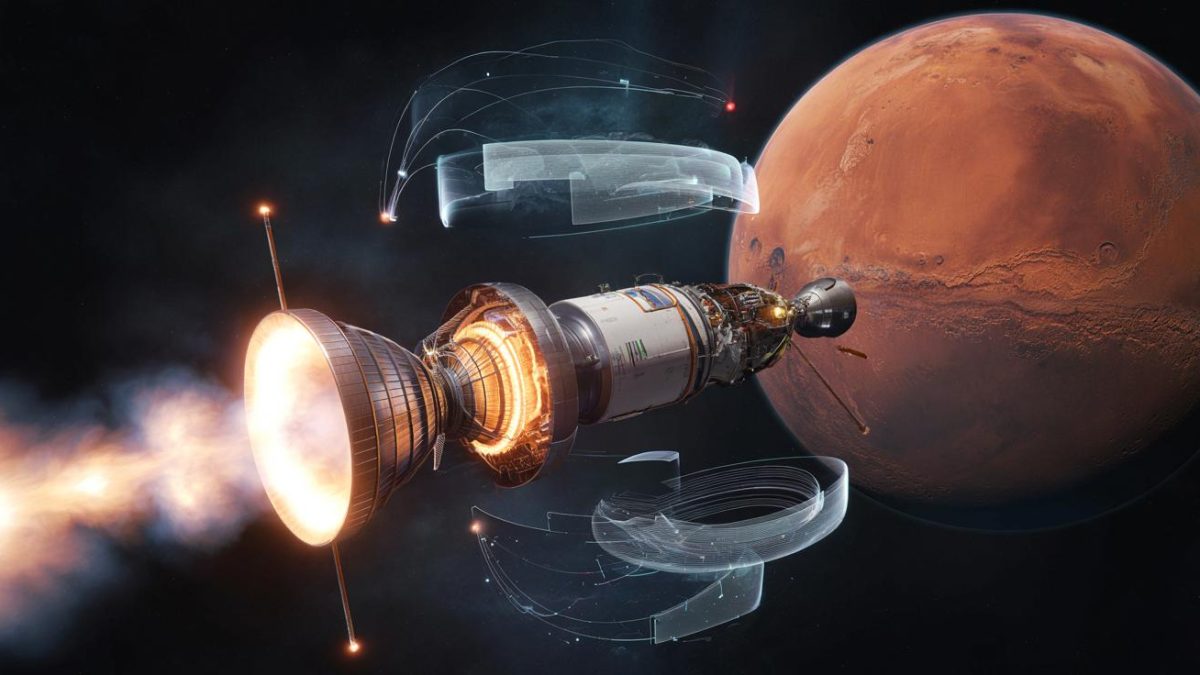
The future of space exploration is taking a giant leap forward, and it’s all thanks to the power of artificial intelligence (AI). As private space companies and government agencies plan for more launches, longer missions, and distant destinations, traditional rocket propulsion is reaching its limits. But AI is revolutionizing the way we design, launch, and navigate spacecraft, paving the way for unprecedented achievements in space travel.
From enhancing the design process to optimizing in-flight operations, AI is poised to redefine the boundaries of what’s possible in rocketry. This technological transformation is not only exciting but also crucial as the space community sets its sights on ambitious goals like reaching Mars and developing advanced propulsion systems. Join us as we explore how AI is reshaping the future of space exploration.
The Driving Force behind the Rocketry Revolution
The increasing frequency of space missions, the demand for longer-duration flights, and the pursuit of more distant destinations are pushing the limits of traditional rocket technology. Conventional chemical rockets, while reliable, can only take us so far. Factors like payload capacity, fuel efficiency, and precision control become critical as the scope of space exploration expands.
This is where AI steps in, offering a range of solutions that can revolutionize the rocketry industry. From the initial design stage to in-flight adjustments, AI is transforming every aspect of the space industry, unlocking new possibilities and ushering in a new era of space exploration.
- ➡Sind Augentropfen wirklich abhängig machend? Ein Augenarzt klärt auf, wann sie gefährlich werden können
- ➡Atomschlag-Alarm: Warum der Keller Sie nicht rettet – und welcher Raum wirklich schützt
- ➡Kopfhören-Test: Nur Wenige können dieses mysteriöse Grollen auslösen
- ➡Wie Sie Ihre Wohnung auch ohne Heizung warm halten können – Tipps und Tricks für die kalte Jahreszeit
Experts believe that the integration of AI into the rocketry industry will be a game-changer, enabling space agencies and private companies to tackle the challenges of modern space travel with greater efficiency and precision.
Reinforcement Learning: The Key to Optimized Rocket Design
One of the most exciting applications of AI in rocketry is its ability to enhance the design process. Reinforcement learning, a subfield of machine learning, is proving to be a powerful tool for optimizing rocket designs. By simulating various scenarios and testing different configurations, AI algorithms can identify the most efficient and reliable designs, reducing the need for costly physical prototyping and testing.
This approach allows engineers to explore a wider range of design options, analyze the trade-offs, and make informed decisions that can significantly improve the performance and reliability of rockets. As a result, space agencies and private companies can develop more advanced and capable rockets, paving the way for ambitious missions to Mars and beyond.
The integration of AI-driven design processes is not only streamlining the development of new rockets but also enabling the optimization of existing systems, ensuring that every launch is as efficient and effective as possible.
- ➡Neuer Look für den Kleinwagen-Star: Wie radikal der Renault Clio nun auftritt
- ➡Frankreich rüstet seine Marine mit autonomen Kampfdrohnen für die See auf
- ➡Geheime Monsterwellen fressen Gletscher von unten auf: Wie Fjorde Grönlands Eismassen bedrohen
- ➡Explode Your Garden in Color with This Summer Flower in Just a Few Days
AI as a Trusted Copilot: Enhancing In-Flight Operations
The challenges of space travel don’t end once a rocket leaves the launch pad. Maintaining optimal performance, adjusting to changing conditions, and ensuring a successful mission are all critical during the flight phase. This is where AI’s capabilities as an in-flight assistant are proving invaluable.
AI-powered systems can continuously monitor and analyze vast amounts of data from the rocket’s sensors, detecting potential issues and making real-time adjustments to ensure the mission’s success. From adjusting fuel consumption to fine-tuning trajectory and navigation, AI can react and respond faster than human operators, minimizing the risk of errors and maximizing the chances of a successful mission.
Moreover, AI-powered systems can also act as a backup for human operators, taking over critical tasks and decision-making processes in the event of an emergency or unexpected scenario. This added layer of redundancy and reliability is essential as the space industry ventures into more complex and demanding missions.
The Road to Nuclear Propulsion: AI’s Role in Advanced Propulsion Systems
As the space industry sets its sights on even more ambitious goals, the need for advanced propulsion systems becomes increasingly crucial. One of the most promising yet challenging technologies is nuclear propulsion, which has the potential to revolutionize space travel by offering significantly higher energy density and efficiency compared to traditional chemical rockets.
- ➡Eine US-Firma will die Natur einfrieren, um das Artensterben zu stoppen
- ➡Wie Sie Schlaf und innere Uhr nach der Zeitumstellung wieder in Einklang bringen
- ➡Ein unerwarteter Star Wars-Treffer für die PS5: Jedi Survivor überrascht für nur 11,99 Euro
- ➡7 leise Anzeichen, dass er oder sie dich wirklich liebt
However, the design and development of nuclear-powered rockets pose unique challenges that require precise modeling, simulation, and optimization. This is where AI steps in, providing the computational power and analytical capabilities to tackle the complex engineering problems associated with nuclear propulsion.
By leveraging AI-driven simulations and modeling, engineers can explore and refine nuclear propulsion designs, optimizing for factors like safety, efficiency, and reliability. This can accelerate the development of these advanced systems, bringing the dream of nuclear-powered spacecraft one step closer to reality.
Navigating the Risks and Rewards of AI in Rocketry
As with any transformative technology, the integration of AI in the rocketry industry comes with both opportunities and challenges. On the one hand, the benefits of increased efficiency, precision, and reliability are clear. AI-powered systems can help space agencies and private companies achieve their ambitious goals more effectively, paving the way for groundbreaking discoveries and breakthroughs.
However, the reliance on AI also raises concerns about the potential risks, such as algorithm bias, system failures, and cybersecurity vulnerabilities. Ensuring the safety and reliability of AI-driven systems in the high-stakes environment of space travel is a critical priority for the industry.
- ➡“Ich dachte, ich werde verrückt”: Die unterschätzte seelische Krise in den Wechseljahren
- ➡Generation Z übernimmt das Ruder – und ist genervt von sich selbst
- ➡Dürfen Lebensmittel kurz vor Ablauf eingefroren werden? Eine Virologin klärt auf
- ➡Rekord-Morcheln sprießen aus dem Boden: Wo Sammler jetzt fündig werden
To navigate these challenges, space organizations are investing heavily in the development of robust, transparent, and accountable AI systems. This includes rigorous testing, validation, and the integration of human oversight and decision-making processes to maintain a balanced approach to AI implementation.
The Future of Rocketry: A Cosmic Collaboration between Humans and AI
As the space industry continues to push the boundaries of what’s possible, the partnership between humans and AI will become increasingly vital. By leveraging the computational power, analytical capabilities, and real-time responsiveness of AI, space agencies and private companies can overcome the limitations of traditional rocketry and unlock new frontiers in space exploration.
From the initial design phase to in-flight operations and the development of advanced propulsion systems, AI is poised to play a crucial role in shaping the future of space travel. As we venture deeper into the cosmos, the synergy between human expertise and AI’s capabilities will be the driving force behind groundbreaking achievements, from reaching the Mars to unlocking the potential of nuclear propulsion.
The transformation of the rocketry industry is not just a technological revolution but a testament to the power of collaboration and innovation. By embracing AI, the space community is poised to rewrite the history of space exploration, ushering in a new era of discovery and wonder that will captivate the world.
- ➡Nur diese 7 seltenen Eigenschaften zeigen wirklich gütige Menschen
- ➡Ikea embraces bamboo: This roller blind trend instantly elevates living rooms
- ➡Ryzen 7 7800X3D Angebot: Gaming-Chip fällt auf unter 280 Euro
- ➡Der neue Trend-Mascara verspricht bis zu dreimal längere Wimpern – erfüllt er dieses Versprechen?
| Key Milestones in AI-Driven Rocketry | Impact on the Space Industry |
|---|---|
| Reinforcement Learning in Rocket Design | Optimized performance, improved reliability, and reduced development costs |
| AI-Powered In-Flight Monitoring and Adjustments | Enhanced mission success rates, increased resilience, and real-time decision-making support |
| AI-Driven Simulations for Nuclear Propulsion | Accelerated development of advanced propulsion systems, improved safety, and increased energy efficiency |
“The integration of AI into the rocketry industry is a game-changer that will enable us to tackle the challenges of modern space travel with greater efficiency and precision. By leveraging the computational power and analytical capabilities of AI, we can unlock new frontiers in space exploration and push the boundaries of what’s possible.”
Dr. Anya Schneider, Aerospace Researcher and Policy Expert
“AI is not just a tool, but a collaborative partner in the quest for space exploration. By combining human expertise with the real-time responsiveness and problem-solving abilities of AI, we can achieve unprecedented feats in rocketry and pave the way for a new era of space travel.”
Also Read
- ➡Mit 71 aufhören zu kämpfen: Warum diese Mutter keine Wertschätzung mehr von ihren Kindern erwartet
- ➡Der vergessene Schutzschild im Brustkorb: Wie die Thymusdrüse Krebsrisiko und Lebensdauer beeinflusst
- ➡Lieber allein als auf jeder Party? Diese 8 stillen Stärken verrät deine Psyche
- ➡Schluss mit wackeligen Tomatenstäben: Diese platzsparende Hängemethode sorgt für stabilen Halt
Liam Fitzpatrick, Lead Rocket Engineer at SpaceX
“The future of rocketry is inextricably linked to the advancements in AI. As we venture deeper into the cosmos, the synergy between human ingenuity and AI’s capabilities will be the driving force behind groundbreaking achievements that will captivate the world.”
Dr. Maria Hernandez, Director of Space Policy, NASA
What are the key benefits of using AI in rocketry?
The primary benefits of integrating AI into the rocketry industry include optimized design, enhanced in-flight operations, and the development of advanced propulsion systems. AI-powered simulations and algorithms can help improve performance, reliability, and efficiency, while also enabling real-time adjustments and decision-making support during missions.
How is AI transforming the design process for rockets?
Reinforcement learning, a subfield of machine learning, is allowing engineers to explore a wider range of design options and identify the most efficient and reliable configurations. By simulating various scenarios, AI algorithms can optimize factors like payload capacity, fuel efficiency, and precision control, streamlining the development of new rockets and enhancing existing systems.
- ➡Gardeners Turn Their Backs on Photinia: This Shrub Will Dominate Hedges in 2026
- ➡Der geheimnisvolle Sternenstrom C-19: Uralte, metallarme Sterne, die Hinweise auf dunkle Materie liefern
- ➡Genius Grandma Method: How to Repair a Broken Zipper Without Sewing
- ➡Wann ist der perfekte Zeitpunkt gekommen, die Monstera umzutopfen?
What role does AI play in in-flight operations?
AI-powered systems can continuously monitor and analyze data from a rocket’s sensors, detecting potential issues and making real-time adjustments to ensure mission success. They can also serve as a backup for human operators, taking over critical tasks and decision-making processes in the event of an emergency or unexpected scenario, enhancing the overall reliability and resilience of space missions.
How is AI aiding the development of nuclear propulsion systems?
The design and development of nuclear-powered rockets pose unique challenges that require precise modeling, simulation, and optimization. AI’s computational power and analytical capabilities are proving invaluable in tackling these complex engineering problems, accelerating the progress towards advanced propulsion systems that can revolutionize space travel.
What are the potential risks and challenges of integrating AI in the rocketry industry?
While the benefits of AI in rocketry are clear, the industry must also address concerns about algorithm bias, system failures, and cybersecurity vulnerabilities. Ensuring the safety and reliability of AI-driven systems in the high-stakes environment of space travel is a critical priority, requiring robust testing, validation, and the integration of human oversight and decision-making processes.
How will the future of rocketry be shaped by the collaboration between humans and AI?
The future of space exploration will be defined by the synergy between human expertise and AI’s capabilities. By leveraging the computational power, analytical skills, and real-time responsiveness of AI, the space industry can overcome the limitations of traditional rocketry and unlock new frontiers in space travel, from reaching Mars to developing advanced propulsion systems like nuclear propulsion.
What are the key milestones in the AI-driven transformation of the rocketry industry?
The integration of AI in rocketry has already led to significant milestones, such as the use of reinforcement learning to optimize rocket design, the implementation of AI-powered in-flight monitoring and adjustments, and the application of AI-driven simulations to accelerate the development of nuclear propulsion systems. These advancements are reshaping the space industry and paving the way for groundbreaking achievements in space exploration.
How are space agencies and private companies addressing the challenges of AI implementation in rocketry?
To navigate the challenges of AI integration in the rocketry industry, space organizations are investing heavily in the development of robust, transparent, and accountable AI systems. This includes rigorous testing, validation, and the integration of human oversight and decision-making processes to maintain a balanced approach to AI implementation and ensure the safety and reliability of these critical systems.