Fruit flies and other tiny gnats may seem harmless, but they can quickly make everyday life in the kitchen unpleasant. You wipe, tidy up, empty the trash, but the swarm just keeps coming back. What is it about these pesky creatures that makes them feel so at home in our kitchens?
The good news is there’s a simple and ingenious solution that can quickly get rid of fruit flies without the need for harmful chemicals or elaborate traps. All you need is a glass, some bait, and a bit of patience.
Why Fruit Flies Love the Kitchen
Fruit flies are naturally drawn to the kitchen because that’s where they find their main food sources: overripe or fermenting fruit, spilled liquids, and even crumbs or residues from cooking. Their keen sense of smell can detect these attractants from miles away, making it almost impossible to completely eliminate their presence.
Unlike many other pests, fruit flies don’t need a lot of space to thrive. A single piece of rotting fruit or a small spill is enough for them to establish a breeding ground. And their life cycle is incredibly fast, with eggs hatching within a day and adults living for only 2-4 weeks.
This means that as soon as you think you’ve gotten rid of them, a new generation is already emerging, ready to start the cycle all over again.
The Glass Trick: How the Trap Works on the Countertop
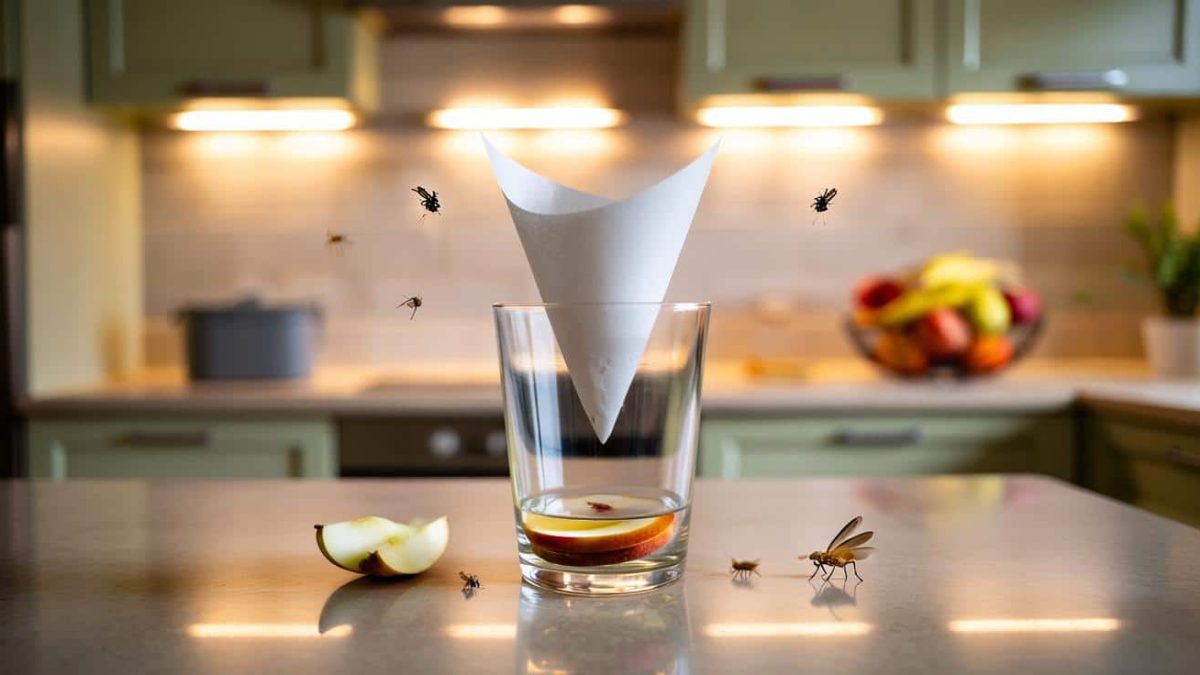
The genius of the glass trap lies in its simplicity. All you need is a regular drinking glass, some bait, and a piece of paper or cardboard.
First, choose your bait. Fruit flies are attracted to sweet, fermenting scents, so things like apple cider vinegar, overripe fruit, or a bit of wine work great. Pour a small amount of the bait into the bottom of the glass.
Next, roll up a piece of paper or cardboard into a funnel shape and place it in the opening of the glass, creating a one-way entrance for the flies. The narrower the funnel, the better, as this makes it harder for the flies to escape.
- ➡Polarlicht-Jäger verrät: So bereiten Sie sich auf die nächste Sonnensturm-Show vor
- ➡Neue Studie: Industrielle Landwirtschaft führt zu dramatischem Rückgang der Vogelbestände
- ➡Schimmel an den Fenstern? Diese 6 Zimmerpflanzen wirken wie ein natürlicher Schutzschild
- ➡Der Trick, der Ihre Hortensien im Frühling zu einer Blütenpracht macht
Finally, place the trap on your kitchen counter or near the fruit bowl, and let it work its magic overnight. The flies will be attracted to the bait, crawl inside the funnel, and become trapped in the glass, unable to find their way out.
Why the Funnel Trick Is So Reliable
The funnel design is key to the success of this trap. Fruit flies have a strong instinct to move upwards, towards the light, when they’re trying to escape. But the narrow opening of the funnel makes it nearly impossible for them to fly back out.
Even if a few flies manage to get in, the steep walls of the glass make it very difficult for them to climb out. And since they’re drawn to the sweet bait at the bottom, they’ll keep trying to reach it, sealing their fate as captives in the trap.
The beauty of this method is that it’s completely non-toxic and humane. The flies don’t suffer, and you can simply dispose of the entire trap in the morning, removing the problem without any mess or fuss.
- ➡Dieser Gefrierfehler verdirbt dein Essen – und fast jeder macht ihn
- ➡Graue Haare, starke Persönlichkeit: 8 Eigenschaften, die Menschen ohne Haarfarbe oft teilen
- ➡H&M Home Surprises with Stylish Wooden Bench Made from Recycled Wood
- ➡Der rätselhafte Sternstrom C-19: Uralte, metall-arme Überreste einer zerstörten Zwerggalaxie
What to Do in the Morning (And When to Upgrade)
When you check the trap in the morning, you’ll likely find a decent number of fruit flies inside. Simply take the whole setup outside and dispose of it, making sure to seal the glass tightly so no escapees remain.
If the trap was particularly successful and you find a large swarm of flies, it’s a sign that you have a bigger problem that needs addressing. In this case, you may want to consider upgrading to a more permanent fruit fly trap or looking into the root causes of the infestation.
This could mean deep cleaning your kitchen, eliminating any sources of rotting food or spilled liquids, and being more vigilant about keeping counters and sinks clean and dry. Preventing the flies from establishing a breeding ground is key to maintaining long-term control.
The Importance of Root Cause Elimination
While the glass trap is an effective and easy solution for getting rid of an existing fruit fly problem, it’s important to remember that it’s not a permanent fix. If you don’t address the underlying causes that are attracting the flies in the first place, the swarm will simply come back after a while.
That’s why it’s crucial to identify and eliminate any sources of food, moisture, or breeding grounds that the flies might be using. This could involve things like:
- Regularly emptying the trash and cleaning up spills
- Storing ripe fruit and other produce in the fridge
- Fixing any leaks or drainage issues in the kitchen
- Thoroughly cleaning out seldom-used appliances and crevices
By taking these proactive steps, you can create an environment that’s less appealing to fruit flies and make it much harder for them to establish a foothold in your kitchen.
| Pros of the Glass Trap | Cons of the Glass Trap |
|---|---|
|
|
“The glass trap is a brilliant hack because it taps into the natural behavior and instincts of fruit flies,” says entomologist Dr. Sarah Johnson. “By creating a one-way entry that they can’t escape, you’re able to quickly and effectively remove them from the kitchen without resorting to harsh chemicals or complicated traps.”
Also Read
- ➡Alzheimer’s Shock: Researchers See Deadly Tau Rush in the Brain
- ➡Keine rutschige Terrasse mehr: Wie Küchenzutaten Moos dauerhaft entfernen
- ➡Verzicht auf Fleisch: Wie gesund ist eine vegetarische Ernährung langfristig wirklich?
- ➡Polarlicht-Jäger verrät: So bereiten Sie sich jetzt auf die nächste Sonnensturm-Show vor
Of course, the glass trap is not the only option for dealing with a fruit fly infestation. There are also commercially available traps, sticky ribbons, and natural repellents that can be effective. But for a quick, easy, and inexpensive solution, it’s hard to beat the humble drinking glass.
“The key is to use this as a short-term fix while also addressing the underlying causes,” advises pest control expert Michael Walters. “If you don’t take steps to eliminate their food sources and breeding grounds, the fruit flies will just keep coming back no matter how many you trap.”
Practical Extras: Alternatives, Risks, and Daily Tips
While the glass trap is a great option for most kitchens, there are a few other alternatives worth considering:
- Vinegar Trap: Similar to the glass trap, but using apple cider vinegar as the bait instead of fruit. Can be more effective in some cases.
- Commercial Fly Traps: These come in a variety of designs, from hanging ribbons to reusable traps. Often more effective but also more expensive.
- Natural Repellents: Things like essential oils, citrus peels, or herbs can help deter fruit flies without trapping them.
As for risks, the only real downside to the glass trap is that it does require daily attention. If you forget to empty it, the flies could eventually escape, and you’d be back to square one. But overall, it’s a safe and simple solution that won’t expose you or your family to any harmful chemicals.
And when it comes to everyday tips, the key is to stay on top of kitchen cleanliness and quickly address any sources of food or moisture that could attract fruit flies. Wipe down counters, store ripe produce in the fridge, and don’t let dirty dishes or spills linger. With a little diligence, you can keep those pesky pests at bay for good.
FAQs
How long does the glass trap take to work?
The trap usually starts catching flies within a few hours, but it’s best to leave it overnight to allow the full effect. Check it in the morning and dispose of the captured flies.
Do I need to change the bait every time?
It’s generally a good idea to use fresh bait each time you set up the trap. The flies are attracted to the scent, so a new batch will be more effective.
Can I use other liquids besides vinegar?
Yes, you can experiment with different baits like wine, beer, overripe fruit, or even a bit of fruit juice. The key is finding something that will attract the fruit flies.
- ➡Neue Spur gegen tödlichen Lungenkrebs: Entzündung macht Tumorzellen extrem widerstandsfähig
- ➡Wo die Menschen in Europa heute am längsten leben
- ➡Heroes of Might & Magic: Olden Era – Die Oberfläche, Einheiten und Spielfunktionen im großen Remake-Check
- ➡Winziger nackter Kater trotzt der Kälte im Tierheim – Kreative Idee rettet sein Leben
How do I dispose of the trapped flies?
Simply take the entire glass trap outside and throw it away. You can also freeze the glass for a few hours to kill the flies first.
Will this trap work for other types of flies?
The glass trap is primarily effective for fruit flies, but it can also work for some other small flying insects like gnats or houseflies.
Do I need to clean the glass before reusing it?
It’s a good idea to give the glass a quick rinse between uses to remove any residue or dead flies. This will help ensure the trap remains effective.
How often should I set up the trap?
You may need to use the trap nightly until you’ve gotten the fruit fly problem under control. Once the population has been reduced, you can use it less frequently as needed.
- ➡Mit 74 Jahren erkennt er: Ich war nie wirklich glücklich – nur ständig gebraucht
- ➡Neuer Mercedes CLA 250+ AMG Line: Übertrifft er Tesla in Sachen Effizienz?
- ➡Alte Gusseisenpfanne statt Teflon: Mit diesem Trick wird sie richtig antihaft
- ➡Astrologie 2026 warnt: Jetzt ist der richtige Zeitpunkt für Stiere, nicht zu zögern, sonst könnte diese Chance für immer verloren gehen
Are there any downsides to the glass trap?
The main potential downside is that it’s a temporary solution and doesn’t address the root cause of the infestation. You’ll need to take additional steps to eliminate the flies’ food sources and breeding grounds.