As a passionate gardener, you know the disappointment all too well: a breathtaking sea of blooms just a few years ago, and now only green balls with a few scattered flowers. What happened? Why do hydrangeas sometimes lose their luster over time? The secret lies in the spring care – and a few clever tricks.
With the right pruning and preparation, you can enjoy your hydrangeas’ stunning floral display year after year. In this article, we’ll reveal the expert tips and insider knowledge that will turn you into a true “hydrangea genius”.
Why Spring Determines the Hydrangea Bloom
The key to lush, long-lasting hydrangea blooms lies in the plant’s growth cycle. Hydrangeas set their flower buds in the previous year, meaning that the care and conditions in spring have a major impact on the summer’s floral show.
Proper spring pruning is essential – but many hobby gardeners make mistakes here. Cutting back too early or at the wrong time can severely limit the number of flowers. The right approach, on the other hand, ensures a reliable bloom for years to come.
- ➡Lidl’s Spring Garden Hit: Wooden Planter Box with Trellis for Small Money
- ➡Tropische Idylle auf Mauritius: Diese Laguneninsel bleibt fast menschenleer
- ➡Forscher präsentieren ein alltägliches Lebensmittel als den Baustoff der Zukunft
- ➡Warnung wegen Listerien: Rückruf von Blutwurst bei Leclerc, Intermarché und Co.
But spring care encompasses more than just pruning. Optimal soil preparation, consistent watering, and protecting the plants from frost also play a crucial role. We’ll explain exactly what you need to do to give your hydrangeas the best possible start to the new growing season.
Properly Categorizing Hydrangeas: Which Variety Needs What Pruning
| Hydrangea Type | Pruning Recommendation |
|---|---|
| Bigleaf Hydrangeas (H. macrophylla) | Prune in spring, just before new growth emerges. Cut back stems to the first pair of healthy buds. |
| Oakleaf Hydrangeas (H. quercifolia) | Prune in late winter/early spring, before new growth appears. Remove any dead, damaged or weak stems. |
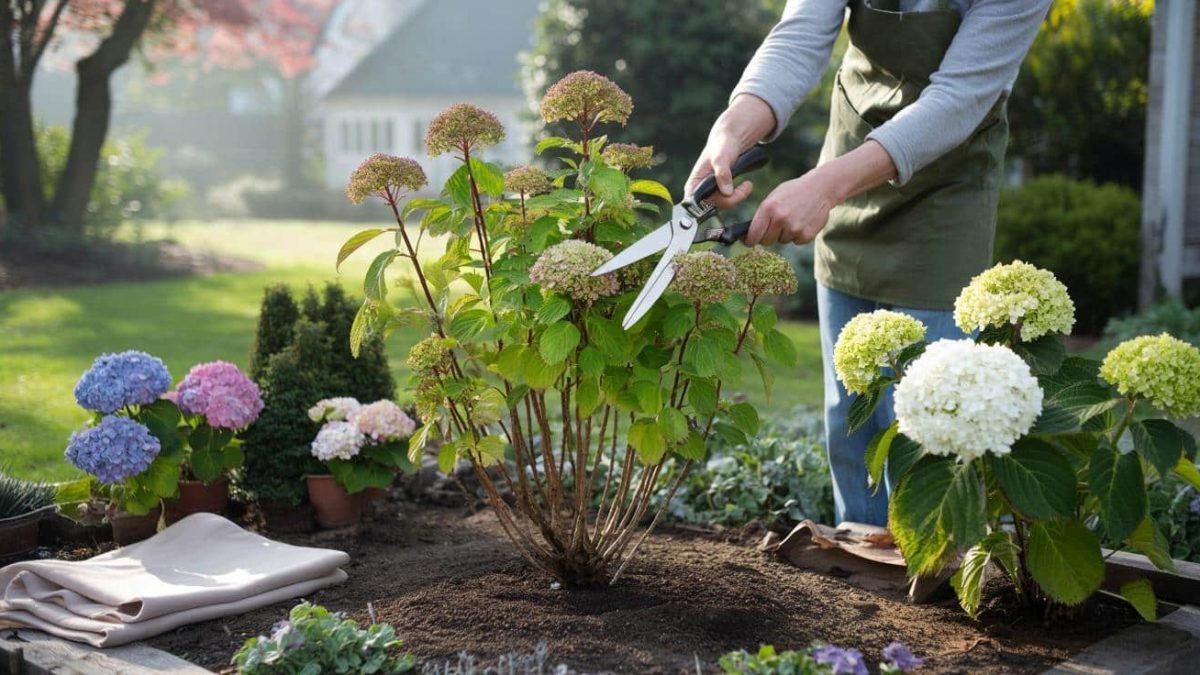
| Panicle Hydrangeas (H. paniculata) | Prune in late winter/early spring, before new growth emerges. Cut back stems by about one-third to one-half. |
| Smooth Hydrangeas (H. arborescens) | Prune in late winter/early spring, before new growth appears. Cut back stems by about one-half. |
Knowing which type of hydrangea you have is the first step to keeping it healthy and blooming year after year. The pruning requirements vary significantly between the different hydrangea varieties.
By following the right pruning guidelines for your specific hydrangeas, you’ll create the optimal conditions for abundant summer flowers. It’s a small but crucial step that makes all the difference.
Three Simple Pruning Rules for Years of Blooms
Beyond categorizing your hydrangeas correctly, there are a few general pruning principles to keep in mind:
- Timing is key: The best time to prune is in early spring, just before new growth appears. This ensures you don’t accidentally remove next season’s flower buds.
- Less is more: When in doubt, err on the side of lighter pruning. Overzealous cutting can severely limit the number of flowers.
- Clean tools make clean cuts: Always use sharp, clean pruners to make precise, clean cuts. Ragged edges can invite disease and pests.
Follow these three simple rules, and you’ll be well on your way to hydrangea blooms that last for years.
Spring Care: Soil, Water, Protection
Pruning is just one piece of the puzzle. Proper spring care in the garden bed is equally important for thriving hydrangeas:
Soil preparation: Hydrangeas thrive in slightly acidic, nutrient-rich soil. In early spring, work some compost or well-rotted manure into the soil around the plants. This will provide a nutrient boost as they start to grow.
Consistent watering: Hydrangeas are heavy drinkers, especially when they’re actively growing in spring and summer. Make sure to water regularly, keeping the soil consistently moist but not waterlogged.
Frost protection: Late spring frosts can damage tender new growth and even kill flower buds. Protect your hydrangeas by covering them on chilly nights or moving potted plants to a sheltered location.
By attending to these key aspects of spring care, you’ll set your hydrangeas up for a season of abundant, long-lasting blooms.
Common Mistakes – And How to Avoid Them
“Many gardeners make the mistake of pruning their hydrangeas at the wrong time. This can severely limit the number of flowers, or even prevent blooming altogether.”
Also Read– Jane Doe, Horticulture Expert
Hydrangeas can be finicky plants, and even small errors in their care can have big consequences. Here are some of the most common pitfalls to watch out for:
- Pruning at the wrong time: Cutting back hydrangeas too early or too late can rob you of flowers. Stick to the recommended pruning window in early spring.
- Letting the soil dry out: Hydrangeas need consistently moist soil. Allow the surface to dry out between waterings, but don’t let the plants wilt.
- Neglecting frost protection: Unprotected hydrangeas can suffer cold damage, losing buds and blossoms before they even have a chance to open.
- Planting in the wrong spot: Most hydrangeas prefer partial shade. Full sun can scorch the leaves and limit bloom production.
By being mindful of these common pitfalls, you can avoid the disappointment of a poor hydrangea bloom and enjoy their beauty for years to come.
Hydrangea Extras: Color Changes, Companion Plants, and Potential Risks
“Hydrangea flowers can actually change color based on the soil pH. Acidic soils produce blue blooms, while alkaline soils result in pink or purple flowers.”
Also Read
- ➡Toxic Gases in the Shower: Cleaning Mix Triggers Major Emergency Response in Albi
- ➡Blossoming on the Slope: Securing Your Hillside for Under 20 Euros per Square Meter
- ➡Samsung’s Hidden Gem: The Secret Button That Safeguards Your Intimate Photos
- ➡Was Ihre Google-Suchen wirklich über Ihre Intelligenz verraten
– Dr. Maria Schneider, Plant Scientist
Beyond the basics of spring care, there are a few additional tips and tricks that can take your hydrangea game to the next level:
Adjust soil pH for color changes: The color of hydrangea flowers is heavily influenced by the soil pH. By amending the soil with aluminum sulfate (for blue) or lime (for pink), you can actually control the bloom hues.
Combine with complementary plants: Hydrangeas look stunning when paired with other shade-loving perennials like ferns, hostas, or azaleas. The contrasting foliage and bloom times create a lush, layered effect.
- ➡Das Fischerdorf bei Lissabon: Günstiges Surfparadies statt überlaufener Insel-Hotspots
- ➡Erschrecken im Weltall: Studie zeigt, wie viel Schwerkraft für den Muskelabbau nötig ist
- ➡Wie ein 62-Jähriger seine Rente um 400 Euro steigerte: Ein fast unbekannter Rententrick
- ➡Frische Farbe am Gartentor? Diese teure Regel trifft Hausbesitzer 2026
Be aware of potential risks: While generally hardy, hydrangeas can fall victim to pests like aphids or diseases like powdery mildew. Keep an eye out and address any issues quickly to protect your plants.
With a little extra care and attention, you can unlock the full potential of your hydrangeas, from vibrant color displays to long-lasting blooms that wow your neighbors year after year.
Frequently Asked Questions
When is the best time to prune my hydrangeas?
The best time to prune hydrangeas is in early spring, just before new growth emerges. This ensures you don’t accidentally remove next season’s flower buds.
How do I know which type of hydrangea I have?
The four main types of hydrangeas are bigleaf, oakleaf, panicle, and smooth. Check the shape and size of the leaves and flowers to identify your variety, then follow the appropriate pruning guidelines.
- ➡Keine Sonnencreme mehr? Wie Zinkoxid-Puder meine Haut vor Frühlingssonne schützt
- ➡Tyrannosaurus rex: Neuere Studien zeigen, dass er weniger intelligent war als angenommen
- ➡Neue Studie zeigt: Viele Menschen nehmen im Alter noch an Kraft und Vitalität zu
- ➡Verdoppeln Sie Ihre Tomaten-Ernte mit zwei einfachen Küchenresten
Can I change the color of my hydrangea flowers?
Yes, you can! The color of hydrangea blooms is influenced by the soil pH. Adding aluminum sulfate will produce blue flowers, while lime encourages pink or purple hues.
How often should I water my hydrangeas?
Hydrangeas are thirsty plants that need consistent moisture, especially during the spring and summer growing seasons. Water regularly, keeping the soil consistently moist but not waterlogged.
Will my hydrangeas bloom the first year after planting?
Not necessarily. It can take a year or two for newly planted hydrangeas to become established and start producing a full floral display. Be patient and focus on providing optimal care in the meantime.
How can I protect my hydrangeas from frost damage?
Cover your hydrangeas with a frost blanket or move potted plants to a sheltered location on chilly spring nights. This will prevent tender new growth and flower buds from being damaged by late frosts.
- ➡Wie eine Vegetarierin jedes Restaurant-Gespräch in eine peinliche Sackgasse führt
- ➡Wie Fische 2026 eine wichtige Chance verpassen, weil sie sich nicht trauen zu handeln
- ➡Heizung aus oder runterdrehen in der Nacht? Was Experten empfehlen
- ➡Hund hat Verbrennungen an den Pfoten: Diese Schritte retten jetzt seine Ballen
What causes hydrangeas to stop blooming?
The most common reasons for reduced blooms are improper pruning, lack of water, or insufficient sunlight. By following the right care and pruning guidelines for your hydrangea variety, you can ensure a reliable floral display year after year.
Can I move my hydrangeas to a different location?
Yes, but it’s best to do so in early spring before new growth appears. Carefully dig up the plant, keeping as much of the root ball intact as possible, and replant it in the new spot. Water thoroughly and provide shade/frost protection as needed.