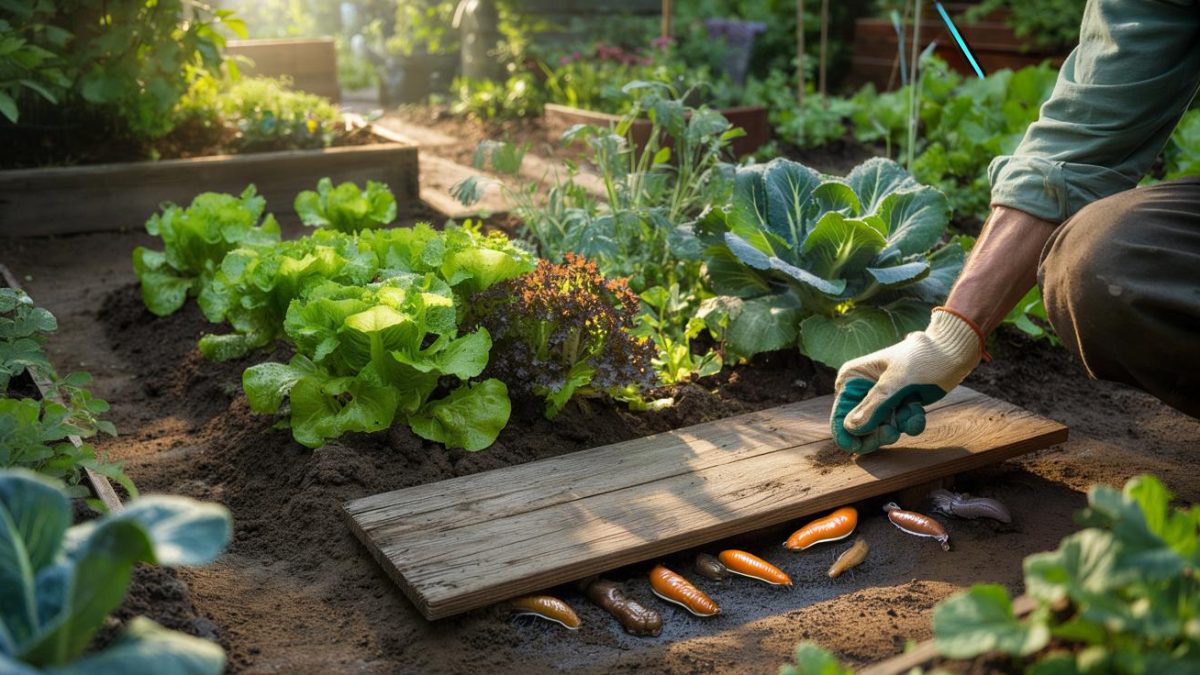
Frustrated hobby gardeners often reach for the blue pellets from the package. But there is a much simpler, cheaper and above all more effective way to get rid of snails in the garden – without using any harmful chemicals. All you need is a simple wooden plank. This clever trick not only protects your plants, but also provides valuable insights into the condition of your garden.
Snails can be a real plague for hobby gardeners. They devour tender shoots and leaves with relentless voracity, leaving behind a trail of devastation. Many then give in to the temptation of chemical snail baits – but these not only harm the environment, they can also be dangerous for pets and children. Fortunately, there is a much more natural solution that is equally effective.
Why Snails Mercilessly Clear Your Beds
Snails thrive in moist, shady areas with plenty of decaying organic material. This is exactly the kind of environment that many hobby gardeners create in their beds and borders without even realizing it. The rich, loose soil and the lush vegetation provide the perfect breeding ground for the slimy pests.
What’s more, snails are particularly attracted to tender young plants that are rich in nutrients. As they slowly munch their way through your lovingly tended seedlings and perennials, they can quickly turn a well-kept garden into a barren wasteland.
- ➡Rotwein rettet nicht das Herz: Ärzte räumen mit gefährlichem Irrglauben auf
- ➡Warum viele Menschen im Alter oft richtig aufblühen – Neue Erkenntnisse aus Langzeitstudie
- ➡70 Jahre Grönland-Eisschmelze: Neue Studie enthüllt das wahre Ausmaß der Klimakrise
- ➡Lieber allein als auf jeder Party? Diese 8 stillen Stärken verrät deine Psyche
But don’t despair – with a simple wooden plank, you can effectively keep the snails at bay without resorting to toxic baits.
How the Wooden Plank Works as a Snail Trap
The principle behind the wooden plank trick is as simple as it is ingenious. Snails are nocturnal animals that move around in search of food at night. During the day, they seek shelter in cool, damp places to protect themselves from the sun and drying winds.
By placing a wooden plank on the ground, you create the perfect hiding place for the slimy pests. The snails crawl under the plank, but then can’t get back out again. In the morning, you can simply lift the plank and remove the trapped snails – no fuss, no muss.
The best part is that this method is completely harmless to the environment and wildlife. No toxic chemicals, no dead snails – just a simple, effective way to control the population without causing any collateral damage.
Poison-Free Gardening: Why the Wooden Plank is a Real Game-Changer
Using chemical snail baits might seem like the easy solution, but it comes with a heavy price. Not only do these products pose a risk to pets and children, they also contaminate the soil and harm beneficial organisms like earthworms and insects.
In contrast, the wooden plank trap is a completely natural and sustainable way to manage snail populations. It’s inexpensive, easy to implement, and doesn’t require any special equipment or expertise. Plus, it allows you to get up close and personal with the problem, giving you valuable insights into the state of your garden.
By regularly checking under the plank, you can quickly identify any problem areas and take targeted action. Are there more snails in the shady corners? Or do they seem to prefer a particular plant species? The wooden plank becomes a kind of diagnostic tool, helping you understand your garden’s ecosystem in a much more nuanced way.
The Plank as a Diagnostic Tool for Your Garden
But the wooden plank isn’t just a snail trap – it’s also a window into the overall health and balance of your garden. By closely observing the number and location of the trapped snails, you can gain valuable insights that will help you make more informed decisions about your gardening practices.
- ➡Das Beka-Kasserolle-Set von 4 Stück ist bei Amazon stark reduziert, die Bestellungen laufen heiß
- ➡Orchids Bloom Again: How a Baking Ingredient Trick Saves Them
- ➡Dieses leckere Wintergericht bereite ich immer voraus – abends bleibt nur noch Genuss übrig
- ➡Lidl Brings Tower Clothes Drying Rack for Small Apartments Under €20
For example, if you consistently find more snails in certain areas, it could be a sign that those spots are too damp or have too much decaying organic matter. This could indicate a need to improve drainage or adjust your mulching habits.
Conversely, if you notice that certain plants or sections of your garden are largely snail-free, that could be a clue that those areas are better suited to your local conditions. You can then use this information to plan future plantings and make your garden more resilient in the long run.
Clever Combinations: How to Make Your Garden Snail-Proof in the Long Term
While the wooden plank trap is an excellent first line of defense against snails, it’s important to remember that it’s not a one-size-fits-all solution. Depending on the size and layout of your garden, you may need to combine it with other snail-deterring strategies to achieve lasting results.
For example, you could surround particularly vulnerable plants with a ring of crushed eggshells or coffee grounds, which snails find unpalatable. Or you could plant aromatic herbs and flowers that naturally repel the slimy pests, like lavender, rosemary, or marigolds.
- ➡Gigantic Cancer Study: Which Eating Habits Significantly Reduce the Risk
- ➡Flache Schuhe statt High Heels: Diese 5 Modelle retten deinen Herbst
- ➡Astrologische Wendepunkte für Wassermann: Warum der 9. März einen entscheidenden Wandel bringt
- ➡A 66-Year-Old Looks Back: The Advice to My Younger Self That Surprises Many
By layering these different approaches, you can create a comprehensive snail-management system that not only protects your plants, but also enhances the overall biodiversity and resilience of your garden.
When the Method Reaches Its Limits
While the wooden plank trap is a highly effective and versatile tool, it’s important to understand that it has its limitations. In heavily infested gardens or during particularly wet and humid weather conditions, you may find that the snails continue to cause damage despite your best efforts.
In such cases, you may need to consider more intensive measures, such as manually removing snails by hand or using copper barriers around your beds. However, even then, the wooden plank can still serve as a valuable diagnostic tool, helping you identify the root causes of the problem and develop a more targeted solution.
Remember, the key to successful snail control is not about eliminating them entirely, but rather about finding a balanced, sustainable approach that protects your plants without harming the wider ecosystem.
- ➡Hype Around Pharmacy Cream: Organic Anti-Aging with Top Ratings Smoothens Wrinkles from 30 Years Old
- ➡What to Do with Snowdrops After Blooming? Gardening Tips for Spring
- ➡Brustkrebs im Gehirn: Medikamenten-Trio bringt unerwarteten Überlebensschub
- ➡Weeds as a Secret Code: What Wild Plants Reveal About Your Soil
Practical Tips from the Garden
When using the wooden plank trap, there are a few practical tips to keep in mind for best results:
- Choose a plank that is at least 30 cm long and 15 cm wide, so that the snails have enough space to crawl underneath.
- Place the plank in a shady, moist area of your garden, preferably near plants that are particularly susceptible to snail damage.
- Check the plank every morning and remove any trapped snails, disposing of them safely away from your garden.
- Rotate the position of the plank regularly to ensure that you’re monitoring different areas of your garden.
- Combine the plank with other snail-deterring methods for a more comprehensive approach.
Remember, the wooden plank is not a quick fix, but rather a long-term strategy for managing snails in a natural and sustainable way. With a little patience and persistence, you can keep your garden thriving and snail-free, without resorting to harmful chemicals.
Why Simple Methods Are Often the Best
In a world that is increasingly dominated by high-tech solutions and complex problem-solving approaches, it’s easy to forget that sometimes the simplest solutions can be the most effective. The wooden plank trap is a perfect example of this – a low-tech, inexpensive tool that delivers impressive results without any negative environmental impact.
By embracing this kind of back-to-basics approach, we can not only protect our gardens and the wider ecosystem, but also reconnect with the natural rhythms and cycles that sustain us. It’s a reminder that sometimes the most ingenious solutions are hiding in plain sight, waiting to be discovered by those who are willing to look beyond the obvious.
- ➡Der geniale Falttrick: So falten Sie Bettwäsche in 30 Sekunden zu einem ordentlichen Paket
- ➡Autism Controversy in the USA: Regulatory Agency Halts Controversial Therapy
- ➡Wie diese unauffällige Blume Tauben aus Garten und Balkon vertreibt
- ➡Wie ehrlich bist du mit dir selbst? Dieser 5-Fragen-Test zeigt es dir unmissverständlich
So the next time you’re faced with a gardening challenge, don’t be afraid to think outside the box and explore the simple, natural solutions that are all around you. You might just be surprised by the results.
What is the main advantage of the wooden plank trap over chemical snail baits?
The main advantage of the wooden plank trap is that it is a completely natural and non-toxic method of controlling snails. Unlike chemical snail baits, the wooden plank does not harm the environment, pets, or children. It’s an inexpensive and sustainable way to manage snail populations without using any harmful substances.
How does the wooden plank help diagnose problems in the garden?
By regularly checking under the wooden plank, you can gain valuable insights into the health and balance of your garden. The number and location of trapped snails can indicate problem areas that need attention, such as overly damp or decaying spots. This information can then help you make more informed decisions about your gardening practices and plant choices.
Can the wooden plank be used in combination with other snail-deterring methods?
Yes, the wooden plank can and should be used in combination with other snail-deterring methods for a more comprehensive approach. For example, you can surround vulnerable plants with a ring of crushed eggshells or coffee grounds, or plant aromatic herbs and flowers that naturally repel snails. By layering these different strategies, you can create a more resilient and long-term snail management system.
- ➡Monty Don’s March Trick: Achieve Huge Hydrangea Blooms with a Mini-Trim
- ➡Mittelmeer statt Karibik: Diese Trauminsel übertrifft alle Erwartungen
- ➡Nachbarn eilen streunender Hündin in den Wald zu Hilfe – Die rührende Entdeckung, die sie dort machen
- ➡Kein Kleber mehr: Mit zwei Alltagshelfern lässt sich jedes Etikett lösen
What are the limitations of the wooden plank trap?
While the wooden plank trap is highly effective in most situations, it does have its limitations. In heavily infested gardens or during very wet and humid weather conditions, the snails may continue to cause damage despite the trap. In such cases, you may need to consider more intensive measures, such as manual removal or copper barriers. However, the wooden plank can still serve as a valuable diagnostic tool to help you identify the root causes of the problem.
How often should the wooden plank be checked?
It’s recommended to check the wooden plank trap every morning to remove any trapped snails. This ensures that you’re staying on top of the problem and not allowing the snail population to build up. Regularly rotating the position of the plank can also help you monitor different areas of your garden more effectively.
Can the wooden plank method be used in all types of gardens?
The wooden plank trap can be a highly effective snail control method in a variety of garden settings, from small urban plots to larger rural properties. However, the specific implementation may need to be adjusted based on the size and layout of your garden. In some cases, you may need to use multiple planks or combine the method with other snail-deterring strategies for best results.
How do I dispose of the trapped snails?
When removing the trapped snails, it’s important to dispose of them in a responsible and humane way. The best option is to relocate them to a distant area away from your garden, where they won’t be able to cause further damage. Alternatively, you can place the snails in a sealed container and put them in the trash. Avoid simply crushing or killing the snails, as this can be unnecessarily cruel.
- ➡Frau dachte an Allergien – Ärzte finden vier lebende Würmer in ihrem Auge
- ➡Geniale Garten-Idee: Wie Klorollen deine Frühlings-Saat über Nacht retten
- ➡Android-Desktop-Modus: Wie dein Pixel 8 den PC überflüssig macht
- ➡Diese zwei Sternzeichen haben Mühe mit Kritik – und riskieren Ende März eine Explosion
Are there any downsides to using the wooden plank trap?
The main downside of the wooden plank trap is that it requires regular monitoring and maintenance to be effective. You’ll need to check the trap daily and remove any trapped snails, which can be time-consuming. Additionally, the trap may not be as effective in heavily infested gardens or during very wet weather conditions. However, these limitations can be mitigated by using the wooden plank in combination with other snail-deterring methods.