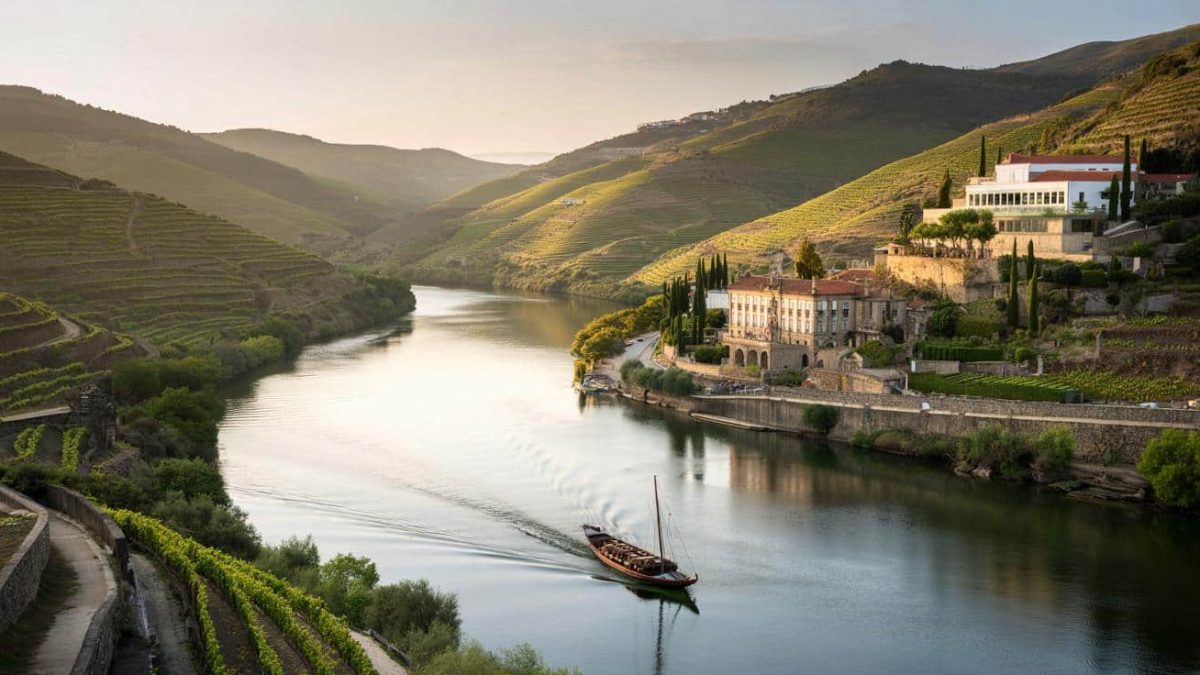
Nestled in the northern reaches of Portugal, the Douro Valley is a hidden gem that often escapes the notice of visitors drawn to the sun-kissed beaches of the Algarve. Yet, those who venture beyond the well-trodden paths discover a landscape so breathtakingly beautiful, it’s no wonder it casts an enchanting spell over all who experience it.
From the moment you catch your first glimpse of the Douro River snaking through the undulating hillsides, dotted with centuries-old vineyards, it’s clear that this is a region unlike any other. The sheer scale and grandeur of the terrain, carved over millennia by the relentless flow of the river, is simply awe-inspiring.
Where the Douro Valley Begins and Why It’s So Captivating
The Douro Valley stretches across the northern reaches of Portugal, tracing the path of the Douro River as it winds its way from the Spanish border to the city of Porto and the Atlantic Ocean. This UNESCO World Heritage Site is renowned for its unique terraced vineyards, which have been cultivated for over 2,000 years, making it one of the oldest wine-producing regions in the world.
What sets the Douro Valley apart is the sheer ruggedness and drama of the landscape. The steep, sun-drenched slopes, carved by the relentless flow of the river, create a series of dramatic terraces that seem to defy gravity. The vineyards that cling to these terraces, their vines twisted and gnarled by centuries of growth, add to the valley’s timeless, almost otherworldly charm.
Yet, the Douro Valley is more than just a wine region. It is a place of breathtaking natural beauty, where the interplay of light and shadow, water and stone, creates a visual tapestry that is constantly in flux, shifting and changing with the seasons and the time of day.
The Alto Douro: One of the Oldest Wine Regions in the World
The Alto Douro, the upper reaches of the Douro Valley, is one of the oldest wine-producing regions in the world. Viticulture has been practiced here for over 2,000 years, with the first documented records of wine production dating back to the Roman era.
Over the centuries, the winemakers of the Douro Valley have developed a unique and highly specialized way of cultivating grapes on the steep, terraced slopes. Using a traditional method known as “socalcos,” they have carved out narrow terraces, often just a few meters wide, to create a patchwork of vineyards that cling to the hillsides like a tapestry.
This labor-intensive approach, which involves manually tending to each and every vine, has resulted in a wine that is truly reflective of the land and the people who have shaped it. The Douro’s renowned Port wine, with its rich, complex flavors, is a testament to the dedication and skill of generations of winemakers.
- ➡10 historische Romane, die Sie in eine andere Zeit entführen
- ➡No More Weeding: These Ground Covers Make Your Garden Low-Maintenance
- ➡“Ich dachte, ich werde verrückt”: Die unterschätzte seelische Krise in den Wechseljahren
- ➡Der neue Garnier-Beauty-Trend: Getöntes Fluid mit LSF50 zaubert einen Filter-Teint
Rabelos: Historic Cargo Boats and Modern-Day Symbols
One of the most iconic images associated with the Douro Valley is the traditional rabelo boat, a flat-bottomed cargo vessel that was once used to transport the region’s famous Port wine down the treacherous Douro River.
These sturdy, single-masted boats were essential to the local economy for centuries, navigating the river’s rapids and whirlpools to deliver their precious cargo to the cellars of Porto. Today, the rabelo has become a symbol of the Douro Valley’s rich history and enduring traditions, with many of these historic vessels now repurposed as tourist attractions and sightseeing boats.
Seeing a fleet of rabelos gliding along the Douro River, their distinctive silhouettes silhouetted against the backdrop of the terraced vineyards and historic quintas (wine estates), is a sight that captures the essence of the region and its deep-rooted connection to the water that has shaped it.
Porto: Experiencing the City Directly on the River
While the Douro Valley is the heart and soul of this captivating region, the city of Porto, situated at the mouth of the Douro River, offers a unique urban experience that complements the rural charm of the surrounding countryside.
Porto’s historic city center, a UNESCO World Heritage site, is a vibrant tapestry of narrow, winding streets, Baroque churches, and colorful buildings that cascade down the hills to the riverfront. Crossing the iconic Luís I Bridge, with its stunning views of the Douro and the famous Port wine cellars, is a must-do for any visitor to the city.
Beyond the stunning architecture and cultural attractions, Porto is also renowned for its thriving food and wine scene, with numerous restaurants, cafes, and bars lining the riverfront promenade and offering the perfect vantage point to soak in the city’s lively atmosphere.
The Transformative Impact of Tourism
As the Douro Valley has gained recognition as a must-visit destination, the region has undergone a remarkable transformation, with a burgeoning tourism industry that has both benefits and challenges.
On the one hand, the influx of visitors has helped to revitalize local communities, driving investment in infrastructure, accommodations, and amenities that have improved the overall visitor experience. Many historic quintas have been lovingly restored, offering travelers the opportunity to immerse themselves in the region’s rich winemaking heritage.
- ➡Wie lange Eiweißreste im Kühlschrank wirklich haltbar sind
- ➡Winter Deals at Boulanger: Massive Discounts on Kitchen and Household Appliances
- ➡Wie Satelliten Früher auf Unwetter Hinweisen Können: Die Rolle Feuchter Böden
- ➡Quantum Battery Breakthrough: Researchers Unveil a Wireless Charging Battery that Charges in Fractions of a Second
However, the rapid growth of tourism has also brought some concerns, with the need to balance the preservation of the Douro Valley’s delicate ecosystems and traditional way of life with the demands of a thriving tourist industry. Careful planning and sustainable development will be crucial in ensuring that the Douro Valley can continue to captivate visitors for generations to come.
Best Time to Visit and Practical Tips
The Douro Valley is a year-round destination, with each season offering its own unique charms and experiences. The summer months of July and August are the busiest, with warm, sunny weather that’s ideal for exploring the vineyards, hiking the scenic trails, and enjoying the region’s renowned gastronomy.
Spring and autumn are also popular times to visit, with milder temperatures and the added bonus of witnessing the Douro Valley’s stunning seasonal transformations – the blossoming of the vines in spring and the vibrant hues of the autumn harvest.
Regardless of when you choose to visit, be sure to plan your trip well in advance, as accommodations and transportation can book up quickly, especially during peak seasons. Additionally, consider renting a car or booking a guided tour to make the most of your time in the Douro Valley and its surrounding areas.
- ➡Staying on Top of Heating Costs: The Two Crucial Times of Day to Save Big
- ➡Nikotin im Vogelnest: Wie Zigarettenfilter Küken vor Parasiten schützen
- ➡Astrologie 2026 zeigt, dass Fische viel mehr erreichen könnten, als sie sich zutrauen
- ➡Neue Gehirnstudie enthüllt: So sieht das Gehirn eines Psychopathen aus
The Douro Valley: More Than Just a Wine Region
While the Douro Valley is undoubtedly renowned for its world-class wines, it is a destination that offers so much more than just a tasting experience. From the awe-inspiring natural beauty of the terraced vineyards to the rich cultural heritage and traditions that have been carefully preserved, this captivating region truly has the power to enchant and inspire all who visit.
Whether you’re a wine enthusiast, a nature lover, or simply someone in search of a truly unique and unforgettable travel experience, the Douro Valley is a destination that should be at the top of your list. So why not start planning your journey to this hidden gem of Portugal today?
| Top Reasons to Visit the Douro Valley | Key Facts about the Douro Valley |
|---|---|
|
|
“The Douro Valley is a truly unique and captivating destination, where the rich history and traditions of winemaking are seamlessly woven into the breathtaking natural landscape. It’s a place that speaks to the heart and soul of Portugal.”
Also Read
- ➡Der Profi-Trick für riesige Tomaten-Ernte: Dieses Vorab-Ritual ist der Schlüssel zum Erfolg
- ➡KI-Revolution frisst unsere Jobs: Experte warnt vor harter Zukunft
- ➡Astrology Shock on March 12, 2026: This Zodiac Sign Experiences a Private Restart
- ➡Was Ihre Google-Suchen wirklich über Ihre Intelligenz verraten
– Maria Ferreira, Wine Tourism Expert
“What sets the Douro Valley apart is the incredible sense of place that permeates every aspect of the region. From the dramatic, terraced vineyards to the warm hospitality of the local people, it’s a destination that leaves a lasting impression on all who visit.”
– João Oliveira, Douro Valley Tour Guide
“The Douro Valley is a true testament to the resilience and innovation of the human spirit. The way the local winemakers have adapted to the challenges of this rugged landscape, cultivating some of the world’s most remarkable wines, is truly inspiring.”
Also Read– Dr. Sofia Martins, Sustainability Researcher
“The Douro Valley is a place that truly captivates the senses, from the stunning vistas that unfold around every bend to the rich, complex flavors of the region’s renowned wines. It’s a destination that lingers in the memory long after you’ve returned home.”
What makes the Douro Valley so unique?
The Douro Valley is renowned for its breathtaking natural beauty, with its steep, terraced vineyards clinging to the hillsides along the Douro River. It is also one of the oldest wine-producing regions in the world, with a rich history and traditions of winemaking dating back over 2,000 years.
What are the must-see attractions in the Douro Valley?
Some of the top attractions in the Douro Valley include the historic quintas (wine estates) that dot the landscape, the traditional rabelo boats that once transported Port wine, the charming city of Porto with its UNESCO-listed historic center, and the stunning hiking trails that offer panoramic views of the valley.
- ➡Das wiederentdeckte Geheimnis: Französisches U-Boot nach 80 Jahren vor der spanischen Küste gefunden
- ➡Healthy on the Wrist: The Most Exciting Smartwatches for 2026
- ➡Populäre Photinia-Hecken vor dem Aus: Dieser Strauch wird 2026 zum neuen Star im Garten
- ➡Eine wiedergefundene Walaufnahme von 1949: Wie sie die Meere neu erklärt
What are the best times of year to visit the Douro Valley?
The Douro Valley is a year-round destination, with each season offering its own unique charms. The summer months of July and August are the busiest, with warm, sunny weather ideal for exploring the vineyards and enjoying the region’s renowned gastronomy. Spring and autumn are also popular, with milder temperatures and the added bonus of witnessing the seasonal transformations of the landscape.
How can I best experience the Douro Valley’s wine culture?
There are numerous ways to immerse yourself in the Douro Valley’s wine culture, from visiting historic quintas and participating in tastings, to taking a boat tour along the Douro River and exploring the wine cellars of Porto. Many tour operators also offer specialized wine-focused itineraries, allowing you to delve deeper into the region’s winemaking traditions.
What are the top outdoor activities in the Douro Valley?
The Douro Valley offers a wealth of outdoor activities, from hiking and cycling through the breathtaking terraced vineyards to taking a boat tour on the Douro River. Other popular activities include rock climbing, kayaking, and horseback riding, all of which allow visitors to immerse themselves in the region’s stunning natural landscapes.
How can I get to the Douro Valley from other parts of Portugal?
The Douro Valley is located in the northern region of Portugal, about 3 hours from Lisbon and 1.5 hours from Porto. The easiest way to reach the valley is by renting a car or booking a guided tour, as public transportation options can be limited in some areas. Alternatively, you can take a train or bus to the major towns and cities within the Douro Valley, such as Pinhão or Régua.
- ➡Maserati mit Ferrari-V8 zum Preis eines Dacia: Ein Traum-Coupé schon für 25.000 Euro erhältlich
- ➡Heizt ein Pole mit Lidl-Berlinern? Skurriles Experiment übertrifft Holzpellets im Preis
- ➡Dieser Gefrierfehler verdirbt dein Essen – und fast jeder macht ihn
- ➡Der perfekte, ultra-cremige Vanille-Flan: Wie Sie ihn immer gelingen lassen
What are the top local cuisine specialties in the Douro Valley?
The Douro Valley is renowned for its vibrant food scene, with a focus on traditional Portuguese dishes that showcase the region’s abundant local produce. Some of the top specialties to try include hearty stews made with regional meats and vegetables, freshwater fish from the Douro River, and the iconic Port wine-infused desserts that have made the area famous.
How can I ensure a sustainable and responsible visit to the Douro Valley?
To ensure a sustainable and responsible visit to the Douro Valley, consider supporting local, family-owned wineries and businesses, opt for eco-friendly accommodations, and choose tour operators that prioritize environmental and cultural preservation. Additionally, be mindful of your impact on the delicate ecosystem and respect the region’s rich traditions and way of life.