Say goodbye to hours spent hunched over in the garden, pulling out stubborn weeds. A simple trick can help your garden practically maintain itself – all it takes is a strategic planting of ground cover plants. These unsung heroes of the gardening world not only add visual interest, but they also efficiently smother unwanted growth and keep your garden looking tidy with minimal effort.
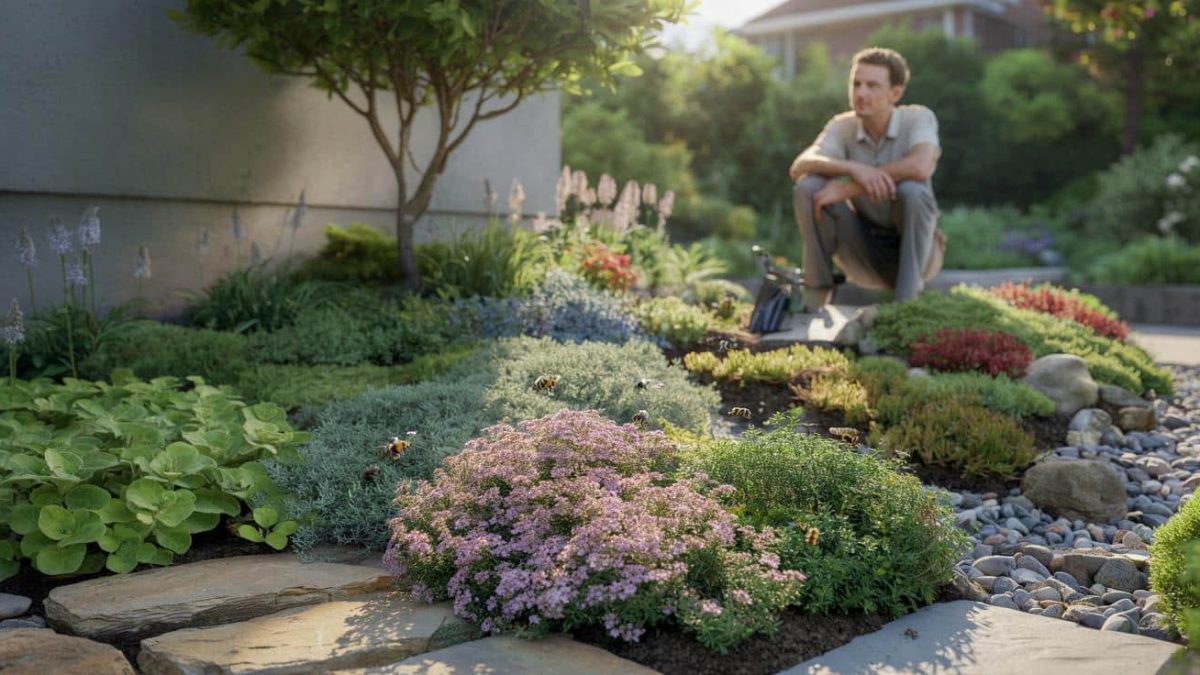
Ground covers are the perfect solution for gardeners who want to enjoy the fruits of their labor without the constant battle against weeds. By establishing a thick, lush carpet of foliage, these resilient plants effectively crowd out and suffocate any invading weeds, leaving you with a beautifully manicured garden. Best of all, this method is far more environmentally friendly than relying on harsh chemicals or endless hours of manual weeding.
The Powerful Trio: Three Ground Covers for Every Garden Situation
When it comes to choosing the right ground cover plants, there are a few standout options that can thrive in a variety of garden settings. Ivy, periwinkle, and sedum are a winning combination that can handle everything from full sun to deep shade, offering a diverse range of colors, textures, and growth habits to suit any outdoor space.
Ivy (Hedera helix) is a classic choice, with its trailing vines and glossy, evergreen leaves that form a dense, carpet-like mat. Periwinkle (Vinca minor), on the other hand, boasts cheerful blue or white flowers that bloom in spring and summer, while its trailing stems quickly spread to fill in bare spots. Sedum, also known as stonecrop, comes in an array of species and cultivars, from low-growing, mat-forming varieties to taller, upright types, all offering succulen
t foliage and occasional flowers.
- ➡Gefahr im Garten: Diese 3 Pflanzen locken ab März giftige Vipern an
- ➡Mercosur-Deal: Diese Lebensmittel treffen Europa jetzt wirklich
- ➡Portugal’s Best-Kept Secret: Why the Douro Valley Captivates Travelers Instantly
- ➡Neue Wasserstoff-Motoren erschüttern die Autoindustrie: Droht dem Elektroauto das Aus?
By strategically planting these three ground cover champions, you can create a harmonious and low-maintenance garden that will thrive with minimal effort on your part.
The Right Density: How Many Plants Per Square Meter?
When it comes to establishing a successful ground cover, the key is finding the optimal planting density. As a general rule, aim for 4-6 plants per square meter. This will ensure a lush, continuous coverage without leaving any gaps for weeds to take hold.
Of course, the exact number may vary depending on the specific ground cover species and their growth habits. Faster-spreading plants like ivy or periwinkle may require a slightly lower density, while more compact sedums may benefit from a higher concentration. Pay attention to the recommended spacing for each plant and adjust accordingly to achieve the perfect balance.
By planting at the right density, you’ll create a seamless, weed-smothering carpet that will quickly establish itself and require little to no maintenance moving forward.
- ➡Der einfache Wasch-Trick, der lästige Waschmittel-Flecken auf Kleidung verhindert
- ➡Warum Sie das Öl aus Sardinendosen niemals in den Ausguss kippen sollten
- ➡Wie Skoda fast so viel Gewinn wie Volkswagen erwirtschaftet
- ➡Rentner im Pflegeheim muss Leasingzahlungen leisten: So schützen Sie Ihre Familie vor versteckten Kosten
Planting Procedure: The Steps to Success
Properly planting your ground cover is essential for its long-term success. Start by thoroughly preparing the planting area, removing any existing weeds or debris. Then, loosen the soil to a depth of about 10-15 cm, incorporating organic matter like compost to improve drainage and fertility.
Next, space the plants out according to the recommended density, taking care to gently firm the soil around each one to ensure good contact with the roots. Water the plants immediately after planting, and continue to keep the soil consistently moist until the ground cover is well-established, which can take 1-2 years.
Once the plants have taken hold, you can encourage even faster growth by applying a layer of organic mulch around the base of the plants. This will help retain moisture and suppress any errant weeds that may try to invade.
The Transformation: What to Expect Over Time
After the initial planting, your ground cover will begin to spread and fill in the bare areas of your garden. Within the first year, you should see the plants growing and knitting together, creating a lush, weed-smothering carpet.
- ➡How AI is transforming rocket technology – on the way to Mars and nuclear propulsion
- ➡7 Sätze, an denen man hohe emotionale Intelligenz sofort erkennt
- ➡Fossiler T. rex-Angriff: Eine in den Knochen eingekeilte Zahnspitze enthüllt eine brutale Jagd
- ➡Dieses erschwingliche Mittelmeer-Abendessen koche ich jede Woche
By the second year, the ground cover will have fully established itself, completely outcompeting any weeds that try to take hold. At this stage, you’ll be able to enjoy a virtually maintenance-free garden, with only the occasional need to trim or thin the plants if they become too dense.
One of the best things about ground covers is that they continue to improve over time. As the plants mature, they’ll become more resilient and better able to withstand foot traffic, drought, and other environmental stresses, making your garden a true oasis of low-maintenance beauty.
Tips and Potential Pitfalls
While ground covers are generally easy to grow, there are a few considerations to keep in mind. Be sure to choose plants that are well-suited to your specific garden conditions, such as sun exposure and soil type. Some ground covers, like ivy, can be aggressive and may need to be contained to prevent them from spreading too far.
Additionally, be patient during the establishment phase, as it can take time for the plants to fully spread and fill in. Resist the urge to pull out any “stragglers” – with time and care, they’ll eventually catch up and create that seamless, weed-smothering carpet.
- ➡Parkinson’s Breakthrough: Japan Approves the World’s First Stem Cell Therapy
- ➡Warum 19 Grad Raumtemperatur oft zu kalt sind – Neue Erkenntnisse zum idealen Heizen im Winter
- ➡Wie einfache Tassen-Tricks Ihre Geschirrspüler-Stromkosten sofort senken
- ➡New York baut eigenes Datenschutz-Bollwerk gegen Big Tech
With a little planning and the right ground cover plants, you can transform your garden into a low-maintenance oasis of lush, thriving foliage that will be the envy of your neighbors.
| Ground Cover Plant | Sunlight Requirements | Growth Habits |
|---|---|---|
| Ivy (Hedera helix) | Full sun to partial shade | Trailing, carpet-forming |
| Periwinkle (Vinca minor) | Full sun to partial shade | Trailing, mat-forming |
| Sedum (Stonecrop) | Full sun to partial shade | Succulent, mat-forming to upright |
“Ground covers are the unsung heroes of the gardening world. They not only add visual interest, but they also efficiently smother unwanted growth and keep your garden looking tidy with minimal effort.”
– Gartenbauexperte, Gartendesign-Berater
Also Read
- ➡Schon nach vier Wochen: Neue Öl-Trickroutine macht strapaziertes Haar sichtbar glatter
- ➡9 geistige Stärken der Generation der 60er- und 70er-Jahre, die heute nur noch selten zu finden sind
- ➡Duschen ab 60: Wie oft ist es noch gesund – und was tut Ihrer Haut jetzt gut?
- ➡Warum es oft ein fataler Fehler ist, Spinnen nach draußen zu setzen
“Establishing a thick, lush carpet of ground cover plants is the key to a low-maintenance garden. By crowding out weeds, these resilient plants can practically maintain themselves, freeing up your time to enjoy the beauty of your outdoor space.”
– Landschaftsarchitektin, Nachhaltigkeits-Beraterin
“One of the best things about ground covers is that they continue to improve over time. As the plants mature, they become more resilient and better able to withstand environmental stresses, making your garden a true oasis of low-maintenance beauty.”
– Gartenbauingenieur, Ökologie-Experte
Gardening should be a pleasure, not a chore. By embracing the power of ground cover plants, you can reclaim your outdoor space and enjoy a beautiful, low-maintenance garden that practically takes care of itself.
Wie viele Bodendecker-Pflanzen pro Quadratmeter sind sinnvoll?
Als Faustregel empfehlen Experten 4-6 Bodendecker-Pflanzen pro Quadratmeter. Dies sorgt für eine dichte, lückenlose Bepflanzung, die Unkraut effektiv unterdrückt.
Müssen die Bodendecker regelmäßig geschnitten werden?
In der Regel benötigen Bodendecker nur einen jährlichen Rückschnitt, um sie in Form zu halten. In den ersten 1-2 Jahren kann gelegentliches Auslichten erforderlich sein, bis sie sich vollständig etabliert haben.
Wie kann ich das Wachstum der Bodendecker ankurbeln?
Eine Mulchschicht um die Pflanzen herum fördert das Wachstum, indem sie Feuchtigkeit hält und Unkraut unterdrückt. Auch eine regelmäßige Düngung im Frühjahr kann das Wachstum zusätzlich anregen.
- ➡Der geniale Hausmittel-Trick gegen Nacktschnecken: So bleiben Salate im Garten heil
- ➡Drama im All: Russischer Frachter verliert Antenne bei ISS-Annäherung
- ➡Ein Kleiner Trick: Mit Diesem Sprechtempo Wirken Sie Sofort Klüger
- ➡Dramatischer Zwischenfall auf der ISS: Russischer Frachter verliert Antenne bei Annäherung
Welche Bodendecker eignen sich für sonnige Standorte?
Sedum-Arten (Fetthenne) und Vinca minor (Immergrün) sind hervorragende Wahl für sonnige Gartenbereiche. Sie bilden dichte, trittfeste Teppiche und benötigen wenig Pflege.
Können Bodendecker auch für Schattengärten verwendet werden?
Ja, Efeu (Hedera helix) und Walderdbeere (Fragaria vesca) sind gute Bodendecker-Optionen für schattige Ecken. Sie wachsen auch an dunkleren Standorten üppig.
Wie lange dauert es, bis sich die Bodendecker flächendeckend ausgebreitet haben?
In der Regel benötigen Bodendecker 1-2 Jahre, um sich vollständig zu etablieren und den Boden lückenlos zu bedecken. Mit der richtigen Pflanzendichte geht dieser Prozess deutlich schneller vonstatten.
Müssen Bodendecker im Winter besonders geschützt werden?
Die meisten Bodendecker-Arten sind winterhart und benötigen keinen besonderen Winterschutz. Lediglich empfindlichere Sorten wie Pachysandra können von einer Mulchschicht profitieren.
Können Bodendecker auch auf Steinflächen gepflanzt werden?
Ja, Sedum-Arten und andere sukkulente Bodendecker eignen sich hervorragend für Kies- oder Schotterbeete. Sie wachsen sogar zwischen Pflastersteinen und Terrassen sehr gut.