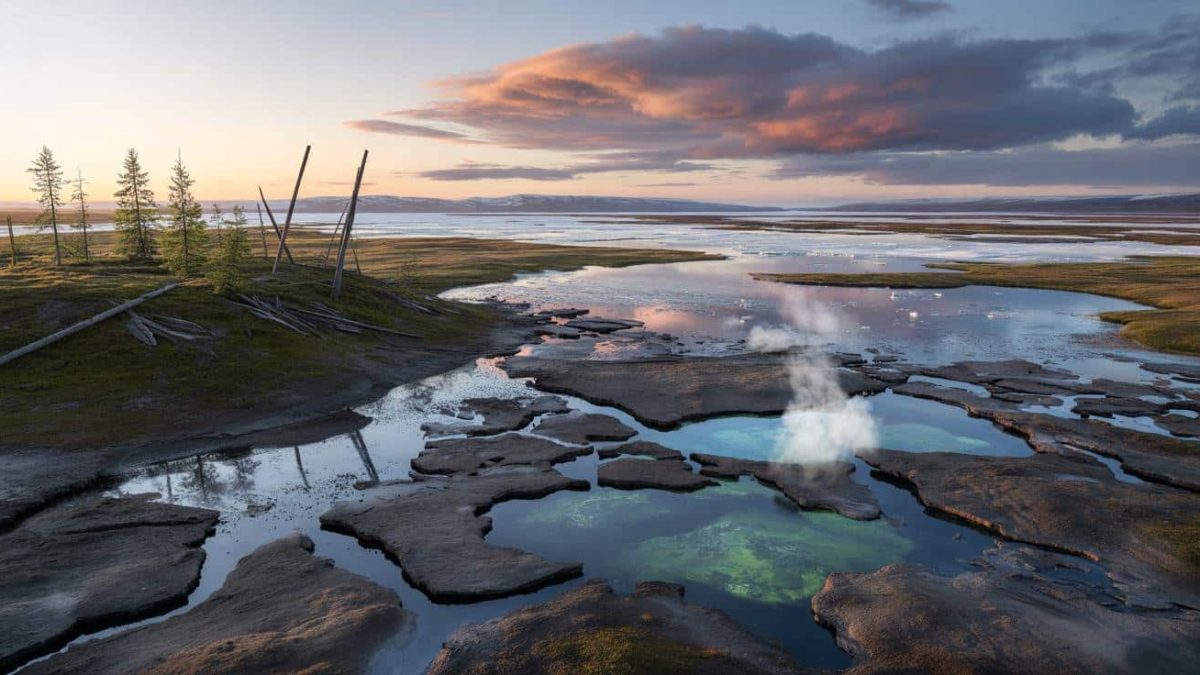
The world’s permafrost regions, which contain vast amounts of frozen organic matter, are under increasing threat as global temperatures rise. New research has revealed that these soils are far more unstable than previously thought, posing a significant risk of releasing much more greenhouse gases into the atmosphere than current models predict.
This alarming discovery has far-reaching implications, as it challenges long-held assumptions about the role of permafrost in the global climate system. Experts warn that the potential release of carbon and methane from thawing permafrost could act as a dangerous feedback loop, further accelerating the pace of climate change.
The Hidden Dangers of Thawing Permafrost
Permafrost, the layer of frozen soil found in Arctic and mountainous regions, has long been considered a relatively stable component of the Earth’s ecosystem. However, recent studies have painted a much more complex and concerning picture. As global temperatures rise, the permafrost is beginning to thaw at an accelerating rate, releasing previously trapped organic matter.
This organic matter, which has been frozen for centuries or even millennia, is now being exposed to the elements and decomposing. The process of decomposition releases greenhouse gases, such as carbon dioxide and methane, into the atmosphere, further exacerbating the effects of climate change.
Researchers have found that the rate of permafrost thawing is much faster than previously estimated, and the amount of greenhouse gases being released is significantly higher than what current climate models had predicted.
The Insatiable Appetite of Microbes
| Greenhouse Gas | Potential Impact |
|---|---|
| Carbon Dioxide (CO2) | Increased levels in the atmosphere, leading to further global warming |
| Methane (CH4) | Powerful greenhouse gas with a higher global warming potential than CO2 |
The primary culprit behind the increased greenhouse gas emissions from thawing permafrost is the activity of microbes. As the frozen soil begins to thaw, these microscopic organisms become active and start consuming the organic matter, releasing the trapped carbon and methane in the process.
The more the permafrost thaws, the more food becomes available for the microbes, leading to an exponential increase in greenhouse gas emissions. This self-reinforcing cycle is a major concern for climate scientists, as it could potentially create a tipping point that would be incredibly difficult to reverse.
Experts warn that the implications of this phenomenon go far beyond the Arctic regions, as the release of greenhouse gases from thawing permafrost could have global consequences.
A Flawed Understanding of Permafrost
For years, scientists have underestimated the complexity and instability of permafrost soils. The prevailing view was that the frozen soil acted as a stable and reliable carbon sink, sequestering vast amounts of carbon that would remain trapped indefinitely.
However, the new research has revealed that this understanding was flawed. The permafrost is far more susceptible to thawing and the subsequent release of greenhouse gases than previously thought. This discovery has significant implications for our understanding of the global carbon cycle and the potential impact of climate change.
As one researcher put it, “We’ve been lulled into a false sense of security about the permanence of the permafrost. The reality is much more alarming, and we need to take urgent action to address this growing threat.”
- ➡Warum der Osterkaktus im Winter nicht blüht – und wie Sie das verhindern können
- ➡Strenge “Tiger-Eltern”: Wie hoher Leistungsdruck Kindern das Selbstwertgefühl nimmt
- ➡Flacher Unterbauch in 10 Minuten: Dieser Home-Workout packt die Tiefenmuskeln
- ➡Polarlichter über Deutschland: Jetzt ist der perfekte Moment für das seltene Himmelsleuchten
Permafrost as a Potential Climate Amplifier
“The permafrost is essentially a time bomb ticking away as the planet warms. We can no longer assume that it will remain frozen and stable – the risks of catastrophic release of greenhouse gases are very real and growing.” – Dr. Sarah Kocher, climate scientist
The new findings on the instability of permafrost soils have led to a reassessment of the role they play in the global climate system. Instead of being a reliable carbon sink, the permafrost is now seen as a potential climate amplifier – a feedback loop that could accelerate the pace of climate change.
As the planet warms, more permafrost will thaw, releasing more greenhouse gases, which in turn will contribute to further warming. This cycle could create a self-reinforcing loop that would be incredibly difficult to interrupt, posing a grave threat to the efforts to mitigate climate change.
Experts warn that this realization has significant implications for the way we approach climate change mitigation and adaptation strategies, as the risks posed by permafrost thawing must now be factored into our planning.
- ➡Warum die Generation der 50er so zäh ist – und was wir von ihnen lernen können
- ➡Der geniale Falttrick: So falten Sie Bettwäsche in 30 Sekunden zu einem ordentlichen Paket
- ➡Rentnerin ohne Arbeit erhält hohe Rente durch unbekannten Anspruch
- ➡Zidane Returns to Algeria: Star Appearance at the Mega-Test in Turin
The Challenges of Controlling Permafrost Emissions
“Trying to control the release of greenhouse gases from thawing permafrost is like trying to put the genie back in the bottle. Once the process starts, it becomes extremely difficult to stop.” – Dr. Mikhail Yuriev, permafrost researcher
One of the major challenges in addressing the threat of permafrost thawing is the sheer scale and complexity of the problem. The permafrost regions cover vast areas of the globe, and the thawing process is already well underway in many of these areas.
Furthermore, the release of greenhouse gases from the permafrost is not a linear process – it is highly dependent on a range of factors, including temperature, moisture levels, and the specific composition of the soil. This makes it extremely difficult to predict the timing and magnitude of the emissions, making it challenging to develop effective mitigation strategies.
Experts warn that efforts to “freeze” the carbon stored in the permafrost, such as through geoengineering techniques, are unlikely to be successful. The scale of the challenge is simply too large, and the process of thawing too complex to control effectively.
The Implications for Everyday Life
The implications of the new research on permafrost instability extend far beyond the scientific realm. The potential for increased greenhouse gas emissions from thawing permafrost could have significant impacts on everyday life, affecting everything from energy prices to food security.
For example, the release of methane, a powerful greenhouse gas, could lead to further increases in global temperatures, which in turn could disrupt agricultural production and food supplies. This could drive up food prices and threaten the livelihoods of millions of people around the world.
Additionally, the thawing of permafrost could also have significant impacts on infrastructure, as the underlying soil becomes less stable and more prone to shifting and subsidence. This could lead to the destruction of roads, buildings, and other critical infrastructure, particularly in Arctic and mountainous regions.
The Way Forward: Adapting to a Changing Climate
“We can no longer ignore the threat posed by thawing permafrost. We need to act quickly and decisively to develop new strategies for mitigating and adapting to the consequences of this phenomenon.” – Dr. Lena Müller, climate policy expert
Also Read
- ➡Wie eine Vegetarierin jedes Restaurant-Gespräch in eine peinliche Sackgasse führt
- ➡Wochenlange Verdächtigungen gegen den Fuchs: Video enthüllt überraschenden Eier-Dieb
- ➡Frühling 2026: Diese Sternzeichen erleben eine turbulente Liebesphase
- ➡Wenn die Einsamkeit nicht mehr schmerzt: Das Warnsignal der Gefühllosigkeit
Given the scale and complexity of the challenge posed by thawing permafrost, experts agree that a multifaceted approach is needed to address the problem. This will require a combination of ambitious emissions reduction efforts, innovative adaptation strategies, and continued research to better understand the dynamics of permafrost thawing.
One key aspect of the solution will be to accelerate the transition to renewable energy sources and reduce our reliance on fossil fuels, which are the primary driver of global warming. This will help to slow the rate of permafrost thawing and, ideally, prevent the worst-case scenarios from unfolding.
At the same time, policymakers and communities in affected regions will need to develop strategies for adapting to the changes that are already underway. This may include investments in infrastructure resilience, the development of early warning systems, and the implementation of emergency response plans to address the impacts of permafrost thawing.
Frequently Asked Questions
What is permafrost, and why is it important?
Permafrost is a layer of frozen soil found in Arctic and mountainous regions. It is important because it contains vast amounts of organic matter that, when thawed, can release large quantities of greenhouse gases like carbon dioxide and methane into the atmosphere, further accelerating climate change.
- ➡DLSS 4.5 vs. FSR 4: Neue Tests zeigen klaren Sieger
- ➡5 Schlüsselfragen, die Sie Ihrem neuen Partner stellen sollten, bevor es wirklich ernst wird
- ➡Blüten-Boost im März: Diese Turbo-Blumen bringen deinem Garten in Rekordzeit Farbe
- ➡Estrangement from one’s own mother: When silence is the only protection
How are climate change and permafrost thawing connected?
As global temperatures rise due to climate change, the permafrost is beginning to thaw at an accelerating rate. This exposes the organic matter trapped in the frozen soil to decomposition by microbes, which release greenhouse gases into the atmosphere. This creates a dangerous feedback loop where the release of greenhouse gases further contributes to climate change.
What are the potential consequences of increased greenhouse gas emissions from thawing permafrost?
The release of greenhouse gases from thawing permafrost could have far-reaching consequences, including further global temperature increases, disruptions to agricultural production and food security, and damage to critical infrastructure in affected regions. Experts warn that this could create a tipping point that would be incredibly difficult to reverse.
What can be done to address the threat of thawing permafrost?
Addressing the threat of thawing permafrost will require a multi-faceted approach, including accelerating the transition to renewable energy, developing innovative adaptation strategies, and continuing research to better understand the dynamics of permafrost thawing. Policymakers and communities in affected regions will need to work together to mitigate and adapt to the consequences of this phenomenon.
How accurate are current climate models in predicting the impact of permafrost thawing?
Recent research has revealed that current climate models have significantly underestimated the instability and potential for greenhouse gas release from thawing permafrost. This suggests that the risks posed by permafrost thawing may be much greater than previously thought, and that more accurate models and projections are needed to guide our response to this emerging threat.
What are the key challenges in controlling greenhouse gas emissions from permafrost?
The primary challenges in controlling greenhouse gas emissions from thawing permafrost include the vast scale and complexity of the problem, the difficulty in predicting the timing and magnitude of emissions, and the limited effectiveness of geoengineering techniques to “freeze” the carbon stored in the permafrost. Experts warn that once the process of permafrost thawing begins, it becomes extremely difficult to stop.
How will the impact of thawing permafrost be felt in everyday life?
The impacts of thawing permafrost could be far-reaching, affecting everything from energy prices and food security to the stability of critical infrastructure. For example, the release of methane could drive up global temperatures, disrupting agricultural production and leading to higher food prices. Damage to roads, buildings, and other infrastructure in affected regions could also have significant consequences for local communities.
What are the key areas of research that need to be prioritized to better understand permafrost thawing?
Experts emphasize the need for continued research to better understand the complex dynamics of permafrost thawing, including the role of microbes, the specific composition and vulnerability of different permafrost regions, and the potential for feedback loops that could accelerate the release of greenhouse gases. Improved modeling and monitoring capabilities will also be crucial in guiding our response to this emerging threat.