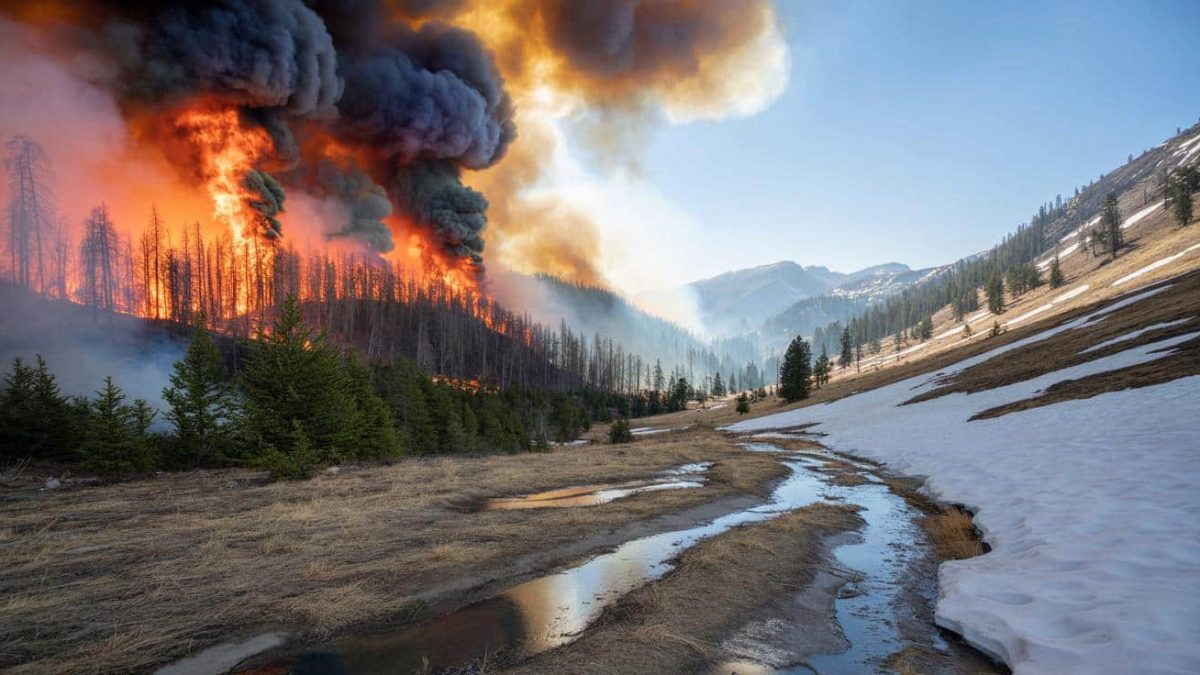
As winter approaches in the Western United States, many people have noticed a concerning trend: milder temperatures, less snowfall, and earlier snow melting on the slopes. This concerning shift in weather patterns is set to exacerbate the wildfire threat in the coming months, with potentially devastating consequences for the region.
The lack of substantial snowpack, which typically serves as a crucial water reservoir for the dry summer months, is a clear warning sign that this year’s fire season could be particularly severe. Experts are closely monitoring the situation, urging communities to prepare for the possibility of intense, fast-moving blazes that could threaten homes, livelihoods, and precious ecosystems.
Thin Snow Cover: A Harbinger of Wildfire Risk
In the mountainous regions of the Western US, a common observation has been the decreasing amount of snowfall and earlier snowmelt in recent years. This trend is not only a consequence of climate change but also a direct contributor to the heightened wildfire danger that the region faces.
The snowpack serves as a natural water storage system, slowly releasing moisture throughout the spring and summer months. When snowpack is diminished, the landscape becomes drier, providing more fuel for potential wildfires. This can lead to earlier and more intense fire seasons, putting communities and ecosystems at greater risk.
- ➡Psychologists Agree: This TV Genre Will Make You Happier Tonight
- ➡Sensational Fossil Discovery: Embedded T. Rex Tooth Reveals Brutal Hunting Attack
- ➡Nach Herzoperation: Ärzte finden überraschenden 10-Zentimeter-Zementstab im Herzen eines Patienten
- ➡Glücklich im Ruhestand: 7 tägliche Entscheidungen, die alles verändern
Experts warn that the lack of substantial snowfall this winter is a clear sign that the coming fire season could be one of the most challenging in recent memory. With tinder-dry conditions expected to persist for longer, the potential for devastating wildfires to ignite and spread rapidly is a growing concern.
The Mechanism Behind the Wildfire-Snow Connection
The relationship between snowpack and wildfire risk is well-established and understood by scientists. When there is a significant snowpack, it acts as a natural water reservoir, slowly releasing moisture into the surrounding environment throughout the spring and summer months.
This gradual release of water helps to maintain higher soil moisture levels and keep vegetation more hydrated, reducing the risk of wildfire ignition and spread. Conversely, when snowpack is sparse or melts earlier than usual, the landscape becomes increasingly dry and flammable, setting the stage for more intense and destructive wildfires.
Researchers have analyzed 36 years of data and found a clear pattern: years with lower-than-average snowpack are consistently followed by more severe wildfire seasons. This correlation underscores the critical role that snowpack plays in regulating the fire risk in the Western US, and the urgent need to address the factors driving its decline.
- ➡Geniale Garten-Idee: Wie Klorollen deine Frühlings-Saat über Nacht retten
- ➡Der moderne Kurzschnitt, der grauen Haaren ab 60 Jahren ein sanfteres Aussehen verleiht
- ➡Project Helix: Erste Bilder der nächsten Xbox-Generation sorgen für Rätsel
- ➡Psychologin enthüllt: Mit diesen Alltagstricks fühlst du dich wirklich zufriedener
Early Warning Signs for the Upcoming Fire Season
As winter approaches, the lack of substantial snowfall in the mountains is already raising alarm bells among experts and local authorities. This early indication of low snowpack serves as a clear warning that the coming fire season could be particularly challenging.
By monitoring the snowpack levels and other relevant climate data, researchers and fire management agencies can better predict the potential severity of the upcoming fire season. This information is crucial for communities to prepare and implement appropriate mitigation strategies, such as enhancing fire prevention efforts, improving evacuation plans, and investing in firefighting resources.
Early warning signs, such as the current lack of snow, provide a valuable opportunity for proactive planning and coordination among various stakeholders, from local residents to policymakers. By heeding these early warning signs, communities can work to minimize the impact of wildfires and protect lives, property, and the natural environment.
Implications Beyond the Western US
While the focus has been on the Western United States, the implications of reduced snowpack and increased wildfire risk extend far beyond this region. Similar trends have been observed in other mountainous areas around the world, including the Alps in Europe, the Himalayas in Asia, and the Andes in South America.
As global temperatures continue to rise and precipitation patterns shift, the threat of more frequent and intense wildfires is a global concern. Communities in these regions must also remain vigilant and prepare for the potential consequences of diminishing snowpack, including the increased risk of water scarcity, ecosystem degradation, and the devastating impact of large-scale wildfires.
Addressing this challenge will require a comprehensive, global effort to mitigate the underlying drivers of climate change and implement robust strategies for adapting to the changing environmental conditions. By learning from the experiences of the Western US and other affected regions, policymakers and local communities can work together to build resilience and safeguard their lands and livelihoods.
Clarifying Common Misconceptions
As the issue of snowpack and wildfire risk gains attention, it’s important to address some common misconceptions that may arise. For example, “heftige Flammen” (fierce flames) does not necessarily mean that the fires will be larger or more destructive than in previous years. Rather, it refers to the increased potential for rapid fire growth and spread due to the drier conditions.
Similarly, the term “Waldbrandgefahr” (wildfire danger) does not imply that all forested areas are at equal risk. The danger can vary significantly based on factors such as vegetation type, topography, and proximity to human settlements. Understanding these nuances is crucial for developing effective prevention and response strategies.
- ➡Forscher untersuchen: Verstecken sich fremde Artefakte in unserem Sonnensystem?
- ➡Schluss mit wackeligen Tomatenstäben: Diese platzsparende Hängemethode sorgt für stabilen Halt
- ➡“Psychologen sind nur für Verrückte”: Wie eine Tochter dieses Tabu sprengte
- ➡The Omega-3 Wonder: How These Fatty Acids Protect the Heart, Brain, and Joints
Additionally, it’s important to recognize that while the lack of snowpack is a significant contributing factor, it is not the sole driver of increased wildfire risk. Other factors, such as drought, land management practices, and human-caused ignitions, also play a crucial role in the complex equation of fire risk and prevention.
Individual Actions to Mitigate Wildfire Danger
While the challenge of addressing the snowpack-wildfire connection may seem daunting, there are steps that individual citizens can take to contribute to the overall effort. Simple actions, such as maintaining defensible space around one’s property, being cautious with outdoor activities, and supporting community-based fire prevention initiatives, can all make a meaningful difference.
Additionally, raising awareness and advocating for policy changes that address the underlying drivers of climate change can help mitigate the long-term risk of wildfires. By working together as a community and supporting comprehensive solutions, we can better prepare for and respond to the growing threat of wildfires in the face of a changing climate.
As the winter season approaches, it is crucial that we remain vigilant and proactive in our approach to wildfire risk. The lack of substantial snowpack is a clear warning sign that the coming months could bring significant challenges, but by understanding the mechanisms at play and taking appropriate action, we can work to protect our communities and safeguard our precious natural resources.
- ➡Polarlicht-Jäger verrät: So bereiten Sie sich jetzt auf die nächste Sonnensturm-Show vor
- ➡Der neue Trend-Mascara verspricht bis zu dreimal längere Wimpern – erfüllt er dieses Versprechen?
- ➡Der geniale Hausmittel-Trick gegen Nacktschnecken: So bleiben Salate im Garten heil
- ➡Viele liegen falsch: Der wahre Unterschied zwischen Schwein und Schweinefleisch
FAQs
What is the connection between snowpack and wildfire risk?
Snowpack acts as a natural water reservoir, slowly releasing moisture into the surrounding environment throughout the spring and summer months. When snowpack is diminished, the landscape becomes drier and more flammable, increasing the risk of wildfire ignition and spread.
How do experts predict the severity of the upcoming fire season?
Experts monitor snowpack levels and other climate data to forecast the potential severity of the upcoming fire season. Lower-than-average snowpack is a clear warning sign that the risk of intense and destructive wildfires is elevated.
What can individuals do to mitigate wildfire danger?
Individuals can maintain defensible space around their properties, be cautious with outdoor activities, and support community-based fire prevention initiatives. Additionally, advocating for policies that address the drivers of climate change can help mitigate the long-term wildfire risk.
How does the snowpack-wildfire connection affect regions beyond the Western US?
Similar trends of decreasing snowpack and increased wildfire risk have been observed in other mountainous regions around the world, including the Alps, the Himalayas, and the Andes. Addressing this challenge requires a global effort to adapt to changing environmental conditions and build resilient communities.
What is the difference between “heftige Flammen” and “Waldbrandgefahr”?
“Heftige Flammen” (fierce flames) refers to the increased potential for rapid fire growth and spread due to drier conditions, while “Waldbrandgefahr” (wildfire danger) describes the overall risk, which can vary significantly based on factors like vegetation, topography, and proximity to human settlements.
Is snowpack the only factor driving increased wildfire risk?
No, while the lack of snowpack is a significant contributing factor, other factors such as drought, land management practices, and human-caused ignitions also play a crucial role in the overall wildfire risk equation.
How can communities prepare for the potential impacts of reduced snowpack and increased wildfire risk?
Communities can enhance fire prevention efforts, improve evacuation plans, invest in firefighting resources, and support comprehensive strategies to address the underlying drivers of climate change and build resilience against the growing threat of wildfires.
What are the potential long-term consequences of the snowpack-wildfire connection?
Reduced snowpack and increased wildfire risk can lead to water scarcity, ecosystem degradation, and the devastating impact of large-scale wildfires on communities and natural resources. Addressing these challenges will require a global effort to mitigate climate change and adapt to the changing environmental conditions.