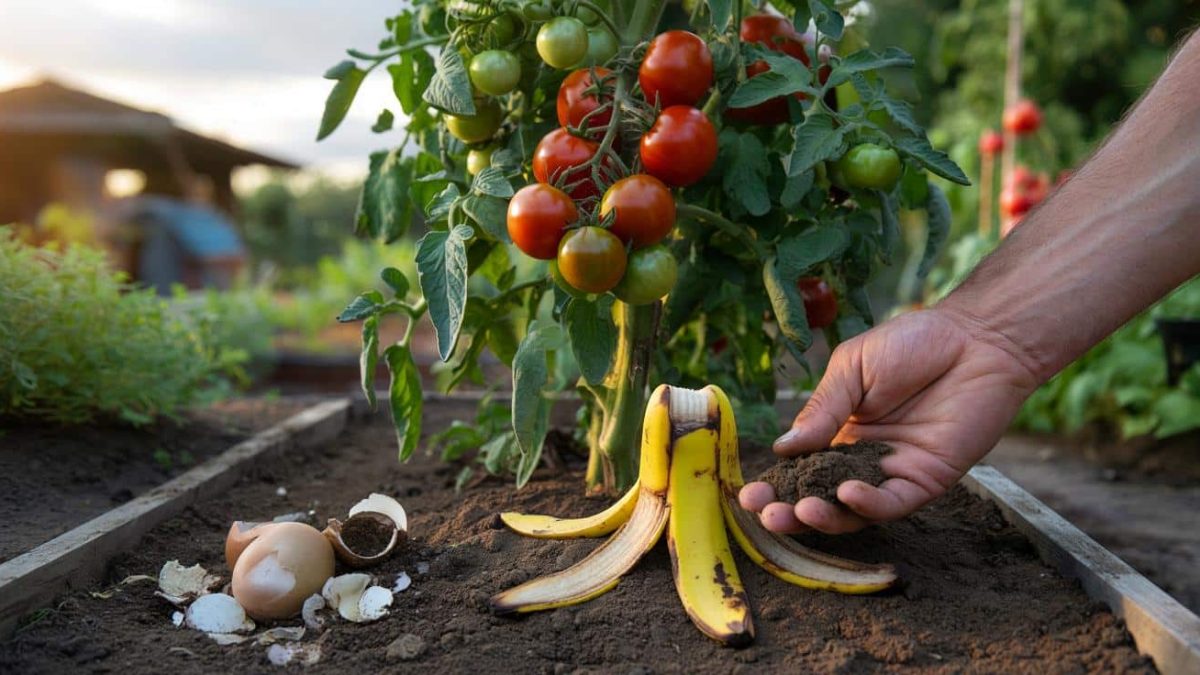
Tomatoes are true gluttons when it comes to nutrients. That’s why many gardeners swear by a little trick: placing banana peels in the tomato patch. The idea is that the decomposing peels release valuable potassium, which tomatoes crave. But is this actually an effective way to fertilize the plants, or is it just a gardening myth?
Let’s take a closer look at the benefits and limitations of using banana peels as a tomato fertilizer. After all, in times of rising food prices and a growing focus on sustainability, every gardener is looking for ways to get the most out of their harvest – and their compost.
Why are tomatoes so hungry for nutrients?
Tomatoes are incredibly productive plants that require a lot of energy and resources to grow and bear fruit. With their rapid growth and heavy fruit production, they quickly deplete the soil of important nutrients like nitrogen, phosphorus, and potassium. This is why tomatoes are often called “heavy feeders” – they need consistent and abundant nourishment to thrive.
Potassium in particular is crucial for tomatoes. It supports the plant’s overall vigor, disease resistance, and fruit quality. Deficiencies can lead to problems like small, misshapen, or mealy tomatoes. That’s where the banana peel idea comes in – the peels are said to be a rich source of potassium.
- ➡Geheime Monsterwellen fressen Gletscher von unten auf: Wie Fjorde Grönlands Eismassen bedrohen
- ➡Warum Ihr Knoblauch so schnell verdirbt – und wie er monatelang frisch bleibt
- ➡Polarlicht-Jäger verrät: So bereiten Sie sich auf die nächste Sonnensturm-Show vor
- ➡Der geniale Trick für ein perfektes Gemüsebeet ohne Umgraben: Mit Pappkarton zum Erfolg
But does the theory hold up in practice? Let’s take a closer look at what banana peels can actually contribute to the garden.
What do banana peels really deliver?
It’s true that banana peels contain significant amounts of potassium – around 42 mg per gram of dried peel. They also provide smaller quantities of other beneficial nutrients like phosphorus, calcium, magnesium, and sulfur.
However, the peels need to break down completely before the plants can access these nutrients. This can take several weeks, depending on factors like moisture, temperature, and soil composition. So the nutrients in freshly buried banana peels may not be readily available to hungry tomato plants in the short term.
Additionally, the overall nutrient content of banana peels is relatively low compared to commercial fertilizers or even homemade compost. So while they can provide a supplemental nutrient boost, they shouldn’t be relied upon as the sole fertilizer for tomatoes.
- ➡Bauerin Justine Causes Double Stir in TV Dating in 2026
- ➡Intestinal Problems on Vacation? 5 Doctor Tricks for a Relaxed Holiday
- ➡Die richtige Zeit, um Stauden zu schneiden: Das Februar-Geheimnis für einen farbenfrohen Garten
- ➡Beliebter Geheimtipp-Zoo in England muss nach fast 50 Jahren für immer schließen
How do gardeners best use the banana peel trick?
To get the most benefit from banana peels in the tomato patch, gardeners should follow a few best practices:
- Bury the peels a few inches deep in the soil around the tomato plants, rather than just leaving them on the surface.
- Chop or blend the peels into smaller pieces to speed up decomposition.
- Time the application so the peels have several weeks to break down before the tomatoes need the nutrients most.
- Supplement the banana peels with other organic matter like compost or well-rotted manure to provide a more complete nutrient profile.
When used this way, the banana peel trick can provide a helpful boost of potassium and other micronutrients. But it shouldn’t be seen as a replacement for a balanced, high-quality tomato fertilizer.
Where are the limits of banana peels as fertilizer?
While banana peels can be a useful addition to the tomato patch, there are some important limitations to keep in mind:
- The nutrient content is relatively low, so banana peels alone can’t fully meet a tomato plant’s needs.
- The nutrients are slow to become available as the peels decompose, so they may not provide an immediate boost.
- Overusing banana peels can lead to an imbalance of nutrients in the soil, potentially causing other deficiencies.
- Banana peels don’t contain the full spectrum of nutrients that tomatoes require for optimal growth and fruit production.
Ultimately, banana peels are best viewed as a supplemental fertilizer rather than a standalone solution. They can be a great way to recycle kitchen scraps and add a touch of potassium to the soil, but shouldn’t be relied upon as the primary source of nutrients for tomato plants.
How can banana peels fit into a balanced garden routine?
To get the most out of banana peels in the tomato patch, gardeners should integrate them into a broader, holistic approach to soil health and plant nutrition. Here are some tips:
- Use banana peels as just one component of a diverse compost or mulch mix, alongside other organic materials.
- Time the application of banana peels to coincide with the tomatoes’ peak nutrient needs, usually mid-to-late summer.
- Monitor the tomato plants for signs of nutrient deficiencies and supplement with additional fertilizers as needed.
- Rotate crops and replenish the soil with cover crops or green manures to maintain long-term fertility.
By taking a comprehensive approach to soil management and plant nutrition, gardeners can maximize the benefits of banana peels while avoiding potential imbalances or deficiencies. It’s all about finding the right balance in the garden.
How can you tell if tomatoes need more potassium?
Recognizing the signs of potassium deficiency in tomato plants can help gardeners know when to turn to solutions like banana peels. Some common indicators include:
- Curling, wilting, or yellowing leaves, especially on the lower part of the plant
- Stunted growth or smaller than normal fruit
- Blossom end rot, where the bottom of the tomato turns brown and leathery
- Increased susceptibility to diseases and pests
If you notice these symptoms, it’s a good idea to have your soil tested to confirm the potassium levels. From there, you can decide if banana peels or another potassium-rich amendment is the right solution.
- ➡Alte Gusseisenpfanne statt Teflon: Mit diesem Trick wird sie richtig antihaft
- ➡Gleiche Haushalt, ungleiche Belastung: Warum Frauen trotz 50/50-Modellen oft mehr Arbeit leisten
- ➡Wie eine KI Dinosaurier-Spuren besser liest als Menschen
- ➡Wie KI den Dschungel der radiologischen Befunde für Patienten verständlich macht
Other kitchen scraps that tomatoes love
Beyond banana peels, there are several other common kitchen waste items that can provide a nutrient boost for tomato plants:
- Coffee grounds – rich in nitrogen, which fuels leafy growth
- Eggshells – a source of calcium to prevent blossom end rot
- Crushed seashells – provide calcium and trace minerals
- Vegetable scraps – add a variety of nutrients as they decompose
As with banana peels, these materials work best when incorporated into the soil or compost rather than just left on the surface. The key is to create a diverse, nutrient-rich environment for your tomato plants to thrive.
Conclusion: a useful supplement, but not a miracle cure
In the end, the banana peel trick can be a helpful way to provide a potassium boost for tomato plants. But it shouldn’t be seen as a silver bullet or replacement for a well-rounded fertilization program.
By using banana peels strategically, as part of a broader approach to soil health and plant nutrition, gardeners can get the most out of this kitchen scrap. It’s all about finding the right balance and giving tomato plants the diverse array of nutrients they need to truly shine.
Can I just bury the banana peels on the surface of the soil?
No, it’s best to bury the peels a few inches deep in the soil around the tomato plants. This helps speed up decomposition and ensures the nutrients become available to the roots more quickly.
Do I need to chop up the banana peels?
Yes, chopping or blending the peels into smaller pieces can help them break down faster and release their nutrients more efficiently.
How much banana peel should I use per tomato plant?
As a general guideline, use about 1-2 banana peels per mature tomato plant, burying them a few inches deep around the base of the plant.
When is the best time to apply banana peels?
For the biggest impact, apply the banana peels a few weeks before the tomatoes’ peak nutrient demand, usually in mid-to-late summer.
Do banana peels provide all the nutrients tomatoes need?
No, banana peels alone cannot fully meet a tomato plant’s nutritional requirements. They should be used as a supplemental fertilizer, not a replacement for a balanced, high-quality tomato fertilizer.
Can I compost banana peels before using them?
Yes, composting the banana peels first can help speed up the decomposition process and make the nutrients more readily available to the tomato plants.
What other kitchen scraps can I use to fertilize tomatoes?
In addition to banana peels, other useful kitchen waste includes coffee grounds, eggshells, vegetable scraps, and crushed seashells.
How do I know if my tomatoes need more potassium?
Signs of potassium deficiency include curling, wilting, or yellowing leaves, stunted growth, blossom end rot, and increased susceptibility to pests and diseases.
- ➡Wie eine Zitronenschale im Mülleimer unangenehme Gerüche reduzieren kann
- ➡Schlafen mit Haustieren: Kuscheln erlaubt oder gesundheitliches Risiko?
- ➡Fünf Profi-Köche testen: Diese Supermarkt-Mayonnaise ist allen anderen überlegen
- ➡Warum der Osterkaktus im Winter nicht blüht – und wie Sie das verhindern können